"I can't be a pessimist, because I'm alive. To be a pessimist means that you have agreed that human life is an academic matter." -- James Baldwin

Tuesday, December 11, 2012

Are You Fragile, or Antifragile?

     Nassim Nicholas Taleb, who famously warned of the Great Recession in his earlier book The Black Swan, now advises us how to thrive in an uncertain world in his new book Antifragile: Things that Gain from Disorder.

    Taleb, a former Wall Street trader and currently a professor at NYU Polytechnic Institute, specializes in probabilities and uncertainties. His singular insight in his first book was that unlikely and improbable events sometimes do occur, and when they do they cause huge, sometimes catastrophic consequences.

     Most of us think that the future will basically repeat the past, with perhaps a few minor variations. But he says the really important events are rare and unpredictable. He calls them Black Swans, a reference to a 17th century truism that all swans were white. What was the chance of seeing a black swan? It was impossible to calculate -- until 1697 when explorers found the black Cygnus atratus in Australia.

    Taleb says that predicting the future by extrapolating past events -- which is what economists, political operatives and marketing gurus do -- may be reasonable and plausible, but the exercise is practically useless. Who predicted September 11, or the financial crisis of 2008? But not all Black Swans are bad. There was the end of the Cold War. The smart phone. "History does not crawl," says Nassim, "it jumps."

     In his new book, Taleb looks at everything from individuals to corporations to governments, and he finds that systems tend to get stronger when they're routinely subjected to minor stress, disorder and turmoil. People and organizations that face up to challenges on an ongoing basis are able to survive the large events. They are antifragile. Conversely, if you're fragile, you're disproportionally harmed by large events.

     Fragile entities can't handle outside threats because they haven't been tested. They can't accommodate change from within because differences are suppressed or ignored. The Soviet Union, which suppressed dissent, was a fragile state. The industrial towns of the Midwest were fragile, because one change killed the town. Silicon Valley is antifragile. Detroit is fragile.

     Democracies are antifragile. They not only tolerate argument and dissent, but actually thrive on the give-and-take of various interests. They trade short-term predictability for long-term stability. A country like Saudi Arabia, which does not tolerate dissent, is a fragile state.

     Who's more fragile -- the loyal 50-year-old corporate employee with 25 years of service and a $100,000 salary, or the cab driver or restauranteur who works for himself and makes $50,000 a year?

     The loyal employee.

     The cabdriver and restauranteur control their own work flow; they're constantly in contact with customers; if things change they know right away and can adapt. The corporate employee is at the mercy of the bureaucracy; he or she doesn't control sales or new products and may not even know about a developing accounting scandal. Typically, loyal employees who get laid off haven't dealt with the changes and the disorder of the outside world -- and may have few resources to make their own way in a new competitive environment. And if those employees carry a lot of debt, they are even more fragile.

     Taleb's message is that while most of us feel uncomfortable with stress and strain, the struggle makes us strong. By responding to small shocks we constantly refine and improve our system. Conversely, removing small shocks creates the illusion of stability, but makes a system more prone to falling apart when the next crisis comes along.

     I don't know how accurate or groundbreaking Taleb's ideas are. They have been criticized by some academics. But they seem interesting and relevant to me, particularly the notion he develops that our modern economy has created structures allowing certain groups of people -- like corporate bankers and politicians -- to take excessive risks without any risk to themselves personally. Top executives and elected representatives are able to pass the downside consequences of their actions onto stockholders, pension funds and taxpayers -- transferring their own fragility to other people.

     One way to avoid this, Taleb argues, is to insist that all decision makers bear the consequences of their actions. Corporate officers should own their company stock, and suffer financially if they make bad decisions, not walk away with million-dollar exit bonuses. Politicians should have the same medical and retirement plans as their constituents. Doctors and lawyers should be paid for results, not on the basis of how many tests they do or motions they file.

    Aside from that, I hope he's right about his main point:  that argument and dissent make a nation stronger. Because we certainly have plenty of that, don't we?
     

Friday, December 7, 2012

Women's Pipeline Problem

     An item this week that caught my attention, and might catch yours . . .


     According to The Week magazine the results of the recent election will bring the number of women in the U. S. Senate to 20, up from 17 in this past session, and the number of women in the House of Representatives up to 80 from 78.

     In both cases, it will mean a record number of women serving in the U. S. Congress.

     Women have been making steady gains in politics ever since 1992, according to Bloomberg Businessweek, when controversial confirmation hearings embroiled Supreme Court candidate Clarence Thomas in sexual harassment charges brought by Anita Hill. Many women were disgusted by the hearings, and turned their anger and frustration into political action. The next election, dubbed The Year of the Woman, brought a then-record seven women into the U. S. Senate. And women have been making progress ever since.

Tammy Baldwin (D, WI)
      Among the new U. S. Senators is Wisconsin's Tammy Baldwin, who won an impressive victory over former governor and U.S. Secretary of Health and Human Services Tommy Thompson, with 51.5% of the vote. She will become the first openly gay member of the Senate when she arrives in Washington in January.

Elizabeth Warren (D, MA)
     Elizabeth Warren beat out Republican incumbent Scott Brown of Massachusetts. Warren, born in Oklahoma, is a bankruptcy specialist and Harvard law professor, who made a name for herself as the "Sheriff of Wall Street," pushing regulation in the financial industry. She survived charges that she had unfairly benefited from minority status after claiming she was 1/32nd Native American, and went on to win her seat with 53.7% of the vote, to Brown's 46.3%.
 

Mazie Hirono (D, HI)
     In Hawaii, where two women were vying against each other for an open Senate seat, U.S. Representative Mazie Hirono, a Democrat, defeated former Republican Governor Linda Lingle to earn the ticket to Washington. (In my state, New York, there were also two women facing off against each other. Incumbent Kirsten Gillibrand, appointed in 2009 to fill out Hillary Clinton's term, easily beat out Republican challenger Wendy Long.)

Heidi Heitkamp (D, ND)
      In a much closer race former North Dakota Attorney General Heidi Heitkamp, a Democrat, defeated Republican U.S. Representative Rick Berg for an open seat. She overcame a 20% Romney win in the state's presidential contest to eke out the Senate seat by a 1% margin of victory.

     Nebraska told a slightly different story, as a Republican woman beat out her male opponent. State Senator Deb Fischer, a rancher and self-described staunch conservative, easily defeated Democrat Bob Kerrey, a former two-term Nebraska Senator who had been living and working in New York for the past ten years.

Deb Fischer (R, NE)
   Still, despite the record number of women in Washington, why is it that women make up over half the electorate, but only 20% of the U. S. Congress?

     "It's partly a pipeline problem," according to The Week. Women take up only about a quarter of the seats in state legislatures, which in effect serve as a farm league for Congressional candidates. But of course women also face the usual career impediments involving family issues. And according to some surveys a lot of potential women candidates are especially put off pursuing politics by the intense scrutiny and political partisanship of the media, with coverage that's too personal, too negative and too stereotyped.


Wednesday, December 5, 2012

Remember Him?


     Everyone's going to remember this person, even though he died 32 years ago.

     He was born in 1940 during the depths of World War II. His mother's name was Julia. His father, Alfred, worked as a merchant seaman and was away at the time of his son's birth.

     His father disappeared "absent without leave" in 1944, which left his wife and young son without means of support. When Alfred later returned home and wanted to reestablish his family, Julia was already pregnant by another man, and she refused his offer.

     Julia eventually remarried, but asked her sister to take care of her boy. Then Alfred wanted to take him back, with a plan to move to Australia. Julia objected, putting the young boy in the position of having to choose between his mother and father. At first he elected to go with his father, but in the end he held his mother's hand and followed her home. It would be 20 years before he saw his father again.

     As might be imagined, he had a rebellious nature and didn't fit in well at school. "I was the one," he later wrote, "who all the other boys' parents would say, 'Keep away from him.' The parents instinctively recognized I was a troublemaker, meaning I did not conform and I would influence their children, which I did. I did my best to disrupt every friend's home, partly out of envy that I didn't have this so-called home ..."

     He listened to Elvis Presley and African American R & B records. He spent much of his youth living with his mother's sister, Aunt Mimi, but his mother often came by and supported his interest in music -- listening to records with him and teaching him how to play the banjo and the piano.

     In high school he was described as a humorous, happy-go-lucky kid who paid little attention to his studies. His school reports were pretty damning:  "Certainly on the road to failure ... a clown in class ... wasting other pupils' time." Yet he showed artistic talent, drew cartoons for his school paper, and claimed that one day he would be famous.

     His mother bought him his first guitar in 1956. She had it delivered to her house -- not to her sister's house where her son was living at the time. The sister hoped the boy would get tired of music and settle down to a more traditional vocation. "The guitar's all very well," she told the boy, "but you'll never make a living out of it."

     His mother was run over and killed by a car in 1958, further roiling his life. He couldn't get into a regular college, so he attended an art institute where he disrupted classes, ridiculed teachers, failed his exams -- and met his first wife Cynthia.

     Meanwhile, he had started a band, and he began to put together the group that would lead him to fame -- but not without a few bumps in the road. He brought in his school friend, Stuart Sutcliffe, to play bass in the band, but he soon quit. The fledgling band signed on a drummer who toured with them to Germany, but then he was replaced by a percussionist with more star power.

     Finally the band settled on its four players. They worked hard, got a lot of experience, and soon went on to fame and fortune. But the rebellious art-school dropout, who would now be 72, was always the leader. His equally famous songwriting partner later admitted that the other band members idolized him. "He was like our own little Elvis ... He was older and very much the leader, he was the quickest wit and the smartest."

     The band's first single was released in October 1962, and by 1963 the lads were topping the charts in England. And if you don't know who I'm referring to by now, you weren't alive in the 1960s. They made their first trip to America in February 1964 and appeared on . . . well, where were you when the Beatles first appeared on Ed Sullivan?

     There's a lot of argument over what song rates as the biggest selling Lennon/McCartney tune. But the best estimate has to be:


     As far as the best-selling John Lennon solo, it was recorded in 1971, after the Beatles broke up, when he was entering the next phase of his life in New York City -- and where as we all know he was shot and killed while walking to his apartment in The Dakota on December 8, 1980.


     In case you're wondering if these songs are still relevant, 40 or 50 years later, I can report that they're still being sung by recording artists all across the universe. If you're interested in more, try the link to this version of Imagine by David Archuleta from American Idol a few years ago; and this modern take on I Wanna Hold Your Hand from the 2007 movie Across the Universe.

Sunday, December 2, 2012

Baby Boomers Slouch into December

     Did it seem to you that December took a long time to get here? It did to me, I guess because Thanksgiving came early this year. My internal clock says December should arrive a few days after Thanksgiving. But this year it took 9 days for the calendar flip over.

     Be that as it may, my Christmas -- er, Holiday lights are up. Santa Claus is standing out there in the rain. And the calendar has also come around again for my turn at the Blogging Boomer Carnival. 

     I'd like to be in a position to spread some Christmas cheer, but the first entry comes to us from John Agno at So Baby Boomer, who reminds us that beginning in the 1960s, many U.S. manufacturers moved their operations to the lowest cost labor source. This resulted in many of the Baby Boomer Generation, who were born in what are now ghost towns, finding employment opportunities elsewhere.

     (But rest assured, So Baby Boomer's reflection on his own ghost town is interesting, not depressing, and it includes a recommendation for a new book by one of my favorite authors.)

     Laura Lee over at Midlife Crisis Queen reports in: "Since I'm now known for my annual 'I'm beginning to dread a lot about Christmas' post, this new post named How to Make Happier Holidays shouldn't surprise you. No more than Congress: DO YOUR JOB! on my Midlife Queen Blows off Steam blog. This one fell out of my brain at 4 a.m. recently!"

     (Although, in my opinion, even thinking about Congress can be depressing!)

     On The Survive and Thrive Boomer Guide, Rita R. Robison, consumer journalist, writes about a Consumer Reports cell phone survey showing that Verizon Wireless received the most favorable scores for voice and data service quality and service. Sprint, T-Mobile, and AT&T received mostly middle to low marks, especially for voice and text service quality.

     (In case anyone's interested, I want an iPad for Christmas, with 4G capability; and my carrier is Verizon.)

     Meanwhile, Baby Boom blogger Katie Foster is traveling these days -- apparently with limited access to the Internet. Since she's based in Dubai, one can only speculate how far afield she's gone this time! But here's a ticket to Arabian Tales if you want to revisit her blog.

     (I myself stay closer to home over Christmas; the best I've got is an invitation to drive 3 hours to go see some family in Pennsylvania.)

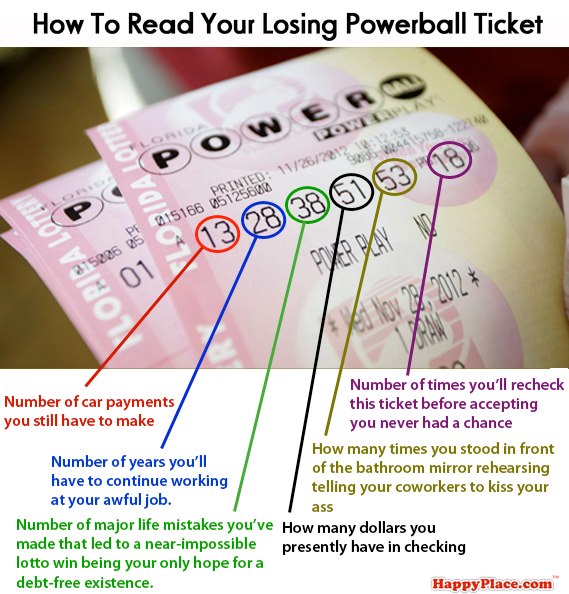
     So anyway, it's not only the Midlife Crisis Queen who's talking about the Fiscal Cliff. I myself did an entry on it a few days ago. But there's another financial issue that was recently on people's minds. Which begs the question: What do you do with last week's losing lottery tickets? Use them for confetti? As kindling to start your Yuletide log? A bookmark?  Or, as one person suggested, throw them all over the Fiscal Cliff to cushion the fall?!?

     Meanwhile, here from HappyPlace.com (which I'd say is R-rated, so don't go there if you're easily offended) are instructions on . . .


Friday, November 30, 2012

What, Me Worry About the Fiscal Cliff?

      A few weeks ago I wrote a piece about the fiscal cliff for the U. S. News retirement site. I saw that the so-called "fiscal cliff" was on the horizon and thought people should know about it. But in all honesty, I figured that the fiscal cliff was kind of a manufactured crisis and that it would go the way of Y-2K after the election was decided and politicians in Washington came to their senses.

     Now I'm not so sure. Perhaps I'm giving people in Washington too much credit.

     The term "fiscal cliff" is shorthand for a series of federal spending cuts and tax hikes that will automatically go into effect in January, if Congress and the President don't get together and act to override them. The measures originated in Congress last year as part of a compromise to pass the Budget Control Act of 2011.

     The
tax hikes include ending the temporary reduction in the payroll tax (which funds Social Security), ending some tax breaks for businesses, changing the alternative minimum tax and inaugurating some taxes to start paying for the Affordable Care Act. They will also affect certain tax credits for college tuition and low-income families. 

     At the same time, the White House has detailed a whole list of budget cuts that will affect over 1,000 government programs, including $55 billion in defense cuts and $11 billion in lower Medicare payments.

     The fiscal cliff presents a giant air pocket for the entire economy. But there are a few ways in which it would affect us seniors in particular.
  

     For example, if you rely on stock or mutual fund dividends to help fund your retirement, you can expect to take a "pay cut," as those dividends, currently taxed at maximum rate of 15%, will be taxed at ordinary income rates, up to about 40%.

     Do you have any capital gains on investments you might have made five or ten or twenty years ago? Again, the tax rate would go up on them. The maximum tax rate on long-term capital gains (investments held longer than a year) will increase from 15% to 20%. Meaning, again, if you plan to cash in some investments to help fund your retirement, you will be forced to take a pay cut.

     And if you do own any investments, either in your IRA or elsewhere, the value of those assets will likely go down. In theory, the value of an investment consists of the after-tax sum of all future returns. If as most experts predict, the economy suffers after going over the fiscal cliff, then those returns will be lower. And to add insult to injury, those lower returns will be taxed at a higher rate.

     It only makes sense that the stock market, as well as private business investments, would deflate to a lower level. High-dividend stocks, defense stocks and banking stocks might be the biggest losers. But even more stable investments in health care, energy and agriculture would probably be a bad bet, since going over the fiscal cliff would leave everyone black and blue.

     And then there's your home. No one knows how the fiscal cliff will influence mortgage rates. But with less government spending, less employment, less after-tax income, and a less robust economy in general, it's hard to see home prices rebounding in any meaningful way. In fact, the fiscal cliff could rachet down value of your house yet again, as funds are squeezed out of the housing market to shore up the rest of the economy.

     And if all this isn't enough, there are the cutbacks. The government spends a lot of money, and if it spends less, then there will be across-the-board cutbacks to government programs, bringing hardships to beneficiaries as well as lower revenues to the thousands of companies that do business with the government.

     More particularly, the fiscal cliff aims to cut some $11 billion out of Medicare, in part by lowering payments to doctors. This could mean individual patients will have to pay the difference. Alternatively, it could put cost pressures on medical facilities, forcing them to reduce staff. Lower payments could also lead doctors to limit the number of Medicare patients they will see. The fiscal cliff could make it harder for some people to find a doctor, and could mean longer wait times and lower quality of service for those who do.

     There is arguably one benefit to the fiscal cliff. Social Security. No, your benefit will not get any higher. But the fiscal cliff automatically ends the 2% payroll tax "holiday" enacted under President Obama in 2010. Since the payroll tax funds Social Security, restoring the higher tax rate will repair some of the damage done to the funding of the program.

     But is that worth all the other pain and suffering that will be brought to you by the fiscal cliff? I doubt it.

      To be sure, there's no reason why Congress couldn't do both:  Reinstate the payroll tax to shore up Social Security and then also make some kind of deal to avoid all those other economic problems. But that would require them to grow up and act like adults. What are the chances of that? 

     P. S. To see what's currently going on in Congress, to witness all that your representatives are doing on your behalf, to view all the frenetic activity going on in Washington to save the situation, check out the Capitol webcam.