"I can't be a pessimist, because I'm alive. To be a pessimist means that you have agreed that human life is an academic matter." -- James Baldwin
Showing posts with label Retirement Activities. Show all posts

Monday, November 20, 2023

How Not to Be Cool

     I was recently a guest on the podcast Awe-Inspired and Retired. We talked about all things retirement, from where we're going to live, to what we're going to do, to who we're going to do it with . . . or what we called the "three likes" of retirement.

     (You can now listen to both of the podcasts I've done using the links under "Retirement Podcasts" on the right hand side of the blog.)

     Anyway, toward the end of the conversation, hosts Caleb Miller and Riley Anderson brought up the subject of "tribes." Apparently, some of their previous guests, talking about retirement, suggested that, after we're done working and raising a family, we have to find a new place in life, find what they call a new tribe.

     Okay, that sounds reasonable.

     Or maybe retirees have more than one tribe. Actually, we all probably have different tribes in our lives -- with different people for different reasons. In my own case, I have my golf group, and my senior learning colleagues, and my "old friends" from back home. My wife and I have our couple friends. And we have, basically, two families (hers and mine, since we're both second spouses). 

     And then the hosts asked me, What's the tribe that everyone wants to be a part of? You know, the group where people are saying, "Yeah, I want to be in that tribe. I want to be with these kinds of people."

     The presumption is, maybe we feel left out of some group -- some group we think is cool -- that seems to enjoy a life that's easier, or richer, or somehow better. Maybe it's some special lunch group, or maybe the elders at church, or the crowd at the theater, or the board of the condo association. Or maybe we envy friends who retired to Florida or Arizona, or even abroad, because they are more adventurous than we are. 

     So, they asked me, is there a tribe where you say, "Gee, I wish I could join that group."

     The question made me chuckle. Because my answer is a definite: "No."

     The reason is, when I was a kid, through high school and beyond, all I wanted to do was be cool . . . be in the cool crowd. But in reality, as I've discovered over the years, the last thing you want to do is be cool. You don't want to be part of the tribe that everyone else wants to join. Instead, you want to be in your own tribe. People who you like, who do the weird things that you like to do, who accept you for who you are.

     And you do not want to be envious of some other cool people who may be richer than you, or more intellectual, or more artsy, or more sporty or more adventurous -- whether they're in town, or in church, or at the senior center, or living somewhere else. You just don't want to get into that.

     I am very anti-cool. And if you don't believe me, just ask my kids.

Saturday, October 21, 2023

Choices in Retirement

     For the most part I have stopped bogging because . . . well, because I've gone on to other things. I'm more involved in my local center for learning in retirement. I've taken up pickleball. I still play golf. I do my daily back stretches and leg exercises. 

     My wife and I have noted that as we've gotten older, just taking care of ourselves seems to eat up most of our time. Going for walks, doing our physical therapy, making doctor appointments, brushing and flossing, trying to eat right, getting enough sleep . . . it's exhausting! 

     But the real reason I've cut back on my blog activities is . . . well, I don't know, I just feel like my posts were beginning to repeat themselves. Why go to all the effort just to say what I've already said before?

     However, I still do like to check in on my blogging friends now and then, to see what you all are up to. And I've kept the blog "live" just in case anyone stumbles onto the site and wants to check out my take on "health, finance, retirement, grown-up children and . . . how time flies." Some posts may be dated, but others still seem relevant and may prove helpful to someone, somehow.

     Also, over the years I have collected a number of links to websites that offer information, inspiration, research and entertainment geared to people over age 60. You'll find this list of Retirement Resources down on the right hand side of the blog, below More Grownup Voices. I've found many of these sites to be helpful, and so I encourage you to check them out.

     For travelers there's a link to Roads Scholar and National Geographic. For lifelong learners there's a link to the Osher foundation. Volunteers might find an opportunity through Volunteer Match.

     I also have some of the standard sites for seniors, such as the AARP site, links to the New York Times, U. S. News Retirement and others.

     There are also links to more offbeat sites, like the sometimes-humorous Manopause, which bills itself as a place for "men over 50 and the people who love them." 

     Another interesting site is The Legacy Project run by Karl Pillemer, professor of gerontology at Cornell University. He has interviewed more than 1500 Americans over age 70, and he shares some of their memories, wisdom and advice, all appropriate for the rest of us.

     For those who are academically inclined, I've posted a number of links to universities that sponsor research on aging and retirement. The Center for Retirement Research at Boston College is one well-known resource. There are also research centers at Johns Hopkins, University of Michigan, Stanford, University of South Florida, University of Utah.

     So scroll down on the right to take advantage of this trove of information, all available for free. Meanwhile, if you've run across any other useful websites that will enrich our retirement lives, I hope you'll share them with us.
 
     One more thing. I have been interviewed on the subject of retirement by the podcast Retirement Tips Radio. (Have podcasts taken over blogging?) Anyway, you can find the link at the top of the right-hand column.

     Take care. Still hope to see you around from time to time.

Friday, April 28, 2023

The Art of Washing Dishes

      There's the James Beard Award for chefs. Celebrity chefs like Rachel Ray and Guy Fieri show off their talents on TV. Famous cooking competitions are refereed by Gordon Ramsey and other culinary stars. But as far as I know, there are no celebrity dishwashers, no dishwashing TV shows, no dishwashing competitions that bring fame and fortune to the winners.

     But there should be. There should be an award.

     Cooking is considered a highly skilled occupation, a calling, an art. But dishwashers are taken for granted, if they're lucky, otherwise they're abused and forgotten.

     But how would you like to go to a restaurant, and find old cheese hardened onto the side of your plate? Or bits of broccoli stuck to the tines of a fork, or some unidentifiable brownish stain on the bottom of your glass?

     No. Dishwashers do not get the credit they deserve.

     I know, because I'm the dishwasher in the family. And let me tell you, it is an underrated job that requires a lot more skill than people realize. 

Before
     "Oh, what are you talking about?" people say to me. "You just stick the dishes in the dishwasher. They get clean!"

     Well, I don't know how to answer these people, except to say that they are no-talent dishwashing hacks!

     First of all, not everyone has an automatic dishwasher. So you have issues involving brushes and sponges, water temperature, dish sequencing, length and strength of scrubbing . . . and more.

     But most of us do have a dishwasher. And like most modern conveniences, that only makes things more complicated.

     First, there's the sorting process. You have to decide what can go in the dishwasher. Some pots and pans are too big. Special serving platters and cut-glass bowls are forbidden by the lady of the house to undergo the trials and tribulations visited upon dishes by the electric dishwasher. 

     Then, where do the larger glasses go, where can you fit the smaller ones? Which knives and forks go straight up, which go pointy end down? (A sharp knife must go point down, unless you want to stab your finger and make a trip to the ER.) That is, unless you have a top rack, in which case sharp instruments go up there.

     You see? It's more complicate than you think. I know, because I learned my dishwashing skills at the foot of my father. When I was a little boy, my older sister had the job of doing the dishes . . . my job was clearing the table. After my sister went to college, my dad took over . . . until my mother retired my father and promoted me to chief bottle washer.

After
     Later, I honed my skills in college. I lived off campus in a rowhouse with five other guys. Two of them cooked. Three of us took turns doing cleanup.

     You'd think a bunch of college guys would have low standards in the cleanliness department. But we didn't have an electric dishwasher. A missed glob of mashed potatoes or a greasy plate brought on a major investigation -- and the sloppy offender could and would be subjected to snide cutting comments and even physical harassment. One guy (seriously) was kicked out of the house for his lax -- and somewhat disgusting -- cleaning standards. 

     After college, and a couple of difficult years with a proudly messy roommate, I moved into my girlfriend's apartment. She was a cook. So my dishwashing skills came in handy . . . and were much appreciated. So much so that we got married!

     Anyway, enough of my personal history. The bottom line is that I am somewhat of an expert at washing dishes -- how to sort, when to rinse and when you don't have to rinse, how to rinse efficiently, how to position the dishes in and around the racks, how to deal with specialty items. And finally, the best way to unload the dishwasher.

     And if you think it doesn't matter how you empty the dishwasher . . . well, clearly you have a few things to learn. Which brings me to my point about getting dishwashers the credit they deserve.

     I'm proposing an award for dishwasher of the year. The Soapy Award and the Sudsy Award have both already been claimed by soap operas. So our award could be . . . The Squeaky.

     Unless you have a better idea for a name. And meanwhile, don't be shy about nominating a candidate for the award from your own life. We dishwashers need some recognition.

Saturday, March 25, 2023

Simple Pleasures

     It seems that most of the retirement advice we get these days is either about money -- when to start taking Social Security, how to invest your 401K -- or else about how to find meaning in life -- you have to volunteer somewhere or maybe find a job.

     Well, that might be true in the early days of retirement, especially if you retire young, in your 50s or early 60s. But the older we get, the more it seems like the simple pleasures become more important.

     Here are a few of my simple pleasures. Maybe you have some others you can suggest.

     Dinner.  I really enjoy sitting down for a hot meal at the end of the day. I'm lucky that I have a companion (my wife) to have dinner with. We go through a little ritual of how we get dinner ready (which includes lighting a candle), and then we talk about the day, gossip about friends, maybe make plans for an outing. Nothing important. But, somehow, it's important.

     Netflix.  Okay, I admit it. I look forward to my TV time after dinner -- sometimes with B, when we find a show we both like, sometimes by myself, if it's something too crude or too violent for her to want to watch.

     Reading.  I read about one book a week. Some are better than others. But I like to start the morning by reading for half an hour or so, with a cup of coffee by my side, just to ease into the day. And I don't know how I would ever fall asleep at night without reading myself into somnolence.


     Gardening.  To be honest, I am not much of a gardener. I haven't done anything in the yard in months. Maybe that's why I'm looking forward to going outside and getting my hands dirty -- breathing the fresh air, smelling the earth, making our little corner of the world look a tiny bit better.

     Breakfast. They say in retirement you need some meaning in life, a reason to get up in the morning. For me, it's breakfast. I love that first cup of coffee. I eat some fruit. Cantaloupe is my favorite. I usually have cereal with 2% milk; every once in a while I cook myself an egg (or three).

     Crossword puzzles.  I started doing them during Covid. Now I can't stop.

     Learning.  I like tackling something a little bit challenging, but not too hard. Right now I'm learning how to do Powerpoint, because I've signed up to make a presentation in the fall for my senior learning group.

     Sports.  I'm about as good at sports as I am at gardening -- meaning, not very good. I used to play Ping Pong. Lately, I've been on the pickleball court. When the weather warms up I'll start playing some golf. Occasionally, I go for a walk. I really do not like to exercise. I find it boring. But if I can get exercise while hitting a ball . . . why, that's what I call interesting!

     So maybe you find your small pleasure in doing your taxes? Or following March Madness? If there's one thing I've learned in my 70 years . . . it takes all kinds.

Saturday, January 14, 2023

Florida ... or Bust?

     I just read that Florida is the most popular state where retired Americans moved in 2022. No surprise there, I guess, although you'd think that the hurricanes might slow things down a bit. Apparently not.

     According to a study that came out in December, Florida was number one. North Carolina took second spot. After that came Michigan (Michigan?!?), Arizona, Georgia, Pennsylvania (Pennsylvania?!?), and Washington state.

     Well, I can explain Pennsylvania, if not Michigan.

     Pennsylvania provides a refuge from its high-tax, high-cost neighbors of New York, New Jersey and Maryland. Yet it's still in the Northeast with its cultural, educational and artistic advantages -- and easy access to the major cities like New York and Washington, DC.

     And by the way, Philadelphia has its own advantages with its world-class symphony, museums, universities . . . and this year, anyway, a great football team!

     But this week I'm joining the crowds heading to Florida. Not to live. Just to vacation for a while. Because (ahem, see above) Pennsylvania is in the Northeast where the winters are cold -- not New England cold, but cold enough. Right now the temperature is 32 degrees outside.

     So next week I'll be reporting in as your stereotypical retired Snowbird from hopefully sunny Florida. After that we'll be visiting kids and grandkids in Charleston, SC. (Surprising to me, South Carolina did not make the list.) Stay safe, stay warm, stayed tuned.

Saturday, December 3, 2022

How to Live a Long Healthy Life

      Many of us say we don't care how long we live, only that we live well while we're around. But the two are intertwined. Those of us who are healthy and feel good are likely to live longer.

     So how do we stay healthy? I wish I had the answer. There probably isn't just one thing, but a package of habits and activities that, put together, help us get out of bed in the morning and keep us moving and living.

     Here are some ideas . . . and how I measure up. How do you measure up? More importantly, do you have any other suggestions? Because I'm always looking for suggestions about how to feel healthier and have a better attitude.


     1.  Get a good night sleep. Eight hours are recommended. Check . . . I'm a good sleeper.

     2.  Eat three healthy meals a day. I start eating breakfast about 7:30, and usually string it out until noon. Is that one meal or two? Then we have dinner around 6:30. Occasionally I have an afternoon snack that, um, sometimes involves potato chips.

     3.  Eat lots of fish, not too much meat. Check.

     4.  Don't eat too many carbs. Unfortunately, I live on carbs.

     5.  Exercise on a regular basis. I exercise on a non-regular basis. Should do more.

Can you touch your toes?

     6.  Drink plenty of water. I should drink more.

     7.  Don't smoke or drink too much alcohol. Haven't done that in years.

     8.  Have a positive attitude. Most of the time.

     9.  Have a good intimate relationship with another person. Yes.

    10.  Laugh a lot. No problem, I laugh at my own jokes!

    11.  Cultivate a few good friends. I don't have really good friends. I have several groups of casual friends.

    12.  Have a purpose in life. Sometimes I think I do; sometimes I wonder.

    13.  Have good genes. My mother lived to 89, my dad to 91. That's pretty good. But not as good as B. Her mother lived to 103.

    14.  Avoid negative, toxic people. But what if they're part of the family?

    15.  Get your regular medical check-ups. Yes, I do that . . . and, with all the vaccinations, have the sore arm to prove it.

     Now it's your turn. Any confessions? Any suggestions? Thanks!

Sunday, November 27, 2022

Are You Happy Where You Live?

      There are several lists of U. S. states where people are the happiest . . . and the unhappiest. According to one list, the most miserable people live in California and New Jersey. But another survey cites Alaska and Maine.

     Some of the happiest people live in states like Colorado, Wisconsin, Washington and Idaho. Everyone else, presumably, is normal -- not depressed but not euphoric either.

     Of course, this assumes that where we live can make us happy. Do you think it does?

     Surely, people who hate the cold shouldn't retire to Michigan or Minnesota. People who hate the heat should avoid Florida and Arizona. I wonder if these days another climate -- the political climate -- can make us happy or miserable. We do typically end up sorting ourselves into like-minded groups, don't we?

     I have several liberal friends who live in liberal New York. Residing among their fellow liberals may make them feel comfortable. But I don't know if that by itself makes them happy. But the reverse can be true. I have a liberal friend who moved to Florida. He lasted a couple of years, then moved back to New York. He got fed up with all the people who, in his opinion, were conservative, Trump-supporting cretins.

     I have a brother-in-law who is a religious conservative living in conservative central Pennsylvania. He seems very happy with his situation, with lots of friends through his church, his community, his family. He would be a fish out of water if he lived in a liberal mecca like Boston or Washington, DC.

     Of course, not all of us identify so closely as liberals or conservatives. Politics is not that important to everyone. I belong to a golf group. There are conservatives and liberals in the group and some independents as well. But it doesn't matter. Everyone is happy to be outside playing golf and joking around with friends instead of sitting at home alone watching TV or doing chores.

     But I'm thinking that there's a lot more to happiness than where we live or even who we hang out with . . . as outlined by my friend Jeremy Kisner in a post I did last year. It helps to be healthy, to have a circle of friends, to have something to do. Wealthier people are happier than poor people -- but only up to a point. I've read that even something as simple as owning a pet can make us happier. And it may not be a coincidence that the things making us happy can also help us live longer.

     I've also read that each of us has our happiness "set point." How happy we are depends more on how we look at things rather than what happens to us, or where we live. If something bad happens to a happy person -- even the loss of a spouse -- they grieve for a while, feel depressed, but eventually their happiness returns to their own natural level. Similarly, the curmudgeons among us might experience a burst of happiness if they win the lottery. But a year or two later? They're still curmudgeons.

     What makes me happy? Having a nice home, a beautiful spouse (both inside and out), some friends to hang out with, a few activities that I find interesting. I do sometimes wonder about the actual purpose of my retired life. Is it bringing me real satisfaction? Am I making a difference?

     I don't know. I used to have the same doubts when I was working, too. For the most part I enjoyed my job. I certainly liked getting paid. But was I really doing anything to improve the world?

     Maybe when we're retired we have a smaller world, bounded by family and neighbors and limited activities. But we can still make a difference to our community, and to the people we love.

     So who are the absolute happiest people? You can check out the list at Digg.com. But according to them, it's the people from Utah. I guess the clean-living Mormons have it all figured out. 

Saturday, November 12, 2022

Games People Play

      I just finished doing today's Los Angeles Times crossword puzzle. Later, I'll do the New York Times crossword. I do it online. I started doing crossword puzzles during Covid as a way to pass the time. But somehow I've become addicted, and I've continued doing them pretty much every day, long after our lives have returned to some semblance of normal.

     My wife turned to jigsaw puzzles during Covid. She started with a few 500-piece puzzles, then graduated to 1000-piece puzzles. When she completed one it sat on the dining room table for a few weeks to show off her accomplishment. However, unlike me, once Covid was over she stopped doing the puzzles. She had better things to do.

     She also spent more time playing the piano during Covid. I think she regrets not having used more of the extra time Covid gave her to really improve her piano skills -- to accomplish something constructive during Covid. However, now she's been going out more, spending less time at home and less time at the piano as well.

     I wonder what games people started to play during Covid -- and if they're still playing them or if they've stopped. I also wonder how much people have returned to pre-Covid normal. Do you do all the things you were doing in 2019?

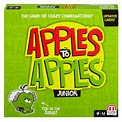
     The other weekend, my wife hosted a party. She and a group of neighbors -- eight women altogether -- drank wine, ate pie, and played Apples to Apples, a game where people draw cards and a judge decides who has the best match. It's a perfect party game that produces lots of laughter -- I know because I was upstairs in my office and had to put on headphones to hear the Netflix program I was watching.

     We'd played Apples to Apples a few times in the past. But never during Covid. Now people are comfortable gathering indoors, without masks, to laugh and have a good time. At least the weather was warm, so B could keep the windows open.

     I wonder what else people have been doing post-Covid -- or have not been doing. B and I like to dance. When we moved in 2017, we joined a local dance club that held social dances once a month at our community center. The club closed down during Covid. Now it's back holding Saturday night dances. But we have not been going. The thought of spending two or three hours on a dance floor crowded with unmasked people -- that just seems a bridge too far.

     I did go back to my table tennis club for a while, when Covid numbers were very low in our area. But I stopped when the numbers went back up. I've been thinking of going back again. But every time I think of sharing a room with 20 - 25 people who are running around and sweating and breathing heavily, I decide . . . well, maybe later.

     We have done some traveling -- mostly by car, not by train or bus or airplane. I am playing golf, because it's all outside. We've been to the movies a couple of times -- the theater has not been crowded at all. We have been going out to restaurants because it's been warm enough to sit outside.

     I'm not sure what we'll do now that the weather is getting colder. I don't mind popping into a store or the post office for a couple of minutes without a mask. I get my haircut. Can't wear a mask when you're getting your hair cut. But I'm just not sure I'd enjoy myself inside at a restaurant, sitting there for an hour or more, breathing in air recirculated through dozens of other people's respiratory tracts.

     Many people are more casual about Covid than I am. They think: heck, we're vaccinated, there are treatments now, it's no worse than getting a cold -- and besides cases are way down, we probably won't get it anyway.

     For us, Covid is over. But it's not over. Anyway . . . I'd better get to that New York Times crossword puzzle.

Saturday, August 27, 2022

It's That Time of Year Again

     I have a friend who watches every single game of the NY Mets. I guess that's one way to spend your retirement.

     But I am not much of a sports fan. I don't watch baseball or hockey or basketball. I never watched much football, either, until we moved to the Philadelphia area the year the Eagles won the Super Bowl. However, since then the Eagles have faded, and so my interest in football has faded as well.

     But one sport I like to watch is tennis -- at least the majors. The U. S. Open starts next week. This past week brought us the qualifying matches, which give 128 young, lower ranked players a chance to get into the tournament. If a player wins three qualifying matches he or she will earn a place in the main draw.

     This is the first year the qualifying rounds have been open to the public since before Covid, in 2019. So I arranged to meet up with my son -- a former college tennis player who lives in Brooklyn -- to catch the action on Thursday. We like to go to the qualifiers, even though we don't see the big names, because it's free (instead of costing hundreds of dollars), and it's not crowded so we can sit right up close to the court (instead of 20 or 30 rows back).

Fans file in and out past banners of past champions

     So I drove over to Hamilton, NJ, took New Jersey transit to Penn Station, then the Long Island railroad to the stadium. I left home at 8 a.m. and arrived just before 11, in time to rendezvous with my son and see the matches start.

     We saw a young American amateur Ethan Quinn (Ranked 506), a freshman at the University of Georgia, lose to a more seasoned player from Argentina. American Zach Svajda (Ranked 306), lost to a Swiss. But American Brandon Holt (Ranked 296) upset a higher-ranked player from Ecuador. And we saw Chris Eubanks (Ranked 147) beat a pro from France.

Holt hammers a serve

     Both Holt and Eubanks went on to win their matches on Friday. So both of these young men will be playing in the main tournament, which starts on Monday and continues to the finals -- the women's final on Sept. 10 and the men's on Sunday, Sept. 11. 

     You probably won't see Holt or Eubanks in the finals. More likely it will be Rafael Nadal, defending champ Daniil Medvedev or possibly the young Greek Stefanos Tsitsipas who we saw play as a 21-year-old qualifier when we went to the Open in 2019.

Banks ready to return

     The women's finals might feature Serena Williams -- she has announced her retirement and this is the last major tournament for her -- or more likely defending champ Emma Raducanu from England or Iga Swiatek from Poland, or possibly American Coco Gauff.

     Just in case you want to know about those other sports . . . current betting gives the Eagles a pretty good chance of getting to the playoffs -- better odds than the Saints or the Seahawks, not as good as defending champs LA Rams or the current favorites the Buffalo Bills.

I also like watching the planes come into LaGuardia airport

     And as for the baseball World Series at the end of October? The LA Dodgers are favored -- with the Yankees, the Houston Astros and the NY Mets (yes, the Mets who are in first place!) given a decent chance. I'll have to put that on my calendar because honestly, otherwise I'd probably forget.  And I promise -- that's all the sports you'll get from me.

Saturday, May 21, 2022

Safe Places

     My wife and I drove into Philadelphia so I could get fitted for a custom brace for my arthritic ankle. I don't know if it'll do any good; but it's worth a try. While we were in the city, we decided to make a day of it.

     We walked up to Washington Square, a six-acre park in Center City that features a statue of George Washington, as well as the tomb of an unknown Revolutionary war soldier. To me, the Revolutionary war seems abstract and far away. But this park is set on the site of a former cemetery. And when you stand in the park, gazing at the statue of Washington and the tomb, and realize there are hundreds of dead soldiers buried under this park, under your very feet, it brings home the terror and tragedy of even a long-ago war.

George Washington and the tomb of the Unknown Soldier

     We continued to the Curtis building, on the north edge on the park, once the headquarters of the company that published the Saturday Evening Post -- famous for its Norman Rockwell cover art -- as well as Ladies Home Journal, Jack and Jill and several other publications. Now the building has been developed into apartments and offices, and features a fountain and a wall-size mosaic in the lobby. 

The museum at the corner of 7th St. and Arch, north of Washington Square

     Our real destination, though, was the nearby African American museum, founded during the 1976 bicentennial, the first museum funded by a municipality to preserve the heritage of African Americans.

     The first floor offers a panoramic history of the struggle to overcome slavery from the Declaration of Independence to the Civil War era. The second floor focuses on art -- some abstract pieces representing visual poetry, and a group of paintings by Miami artist Purvis Young (1943 - 2010). He painted scenes on whatever surfaces he could find -- scraps of wood, pieces of cardboard, automobile hubcaps and other trash he picked up in his neighborhood.

A Derrick Adams collage with Green Book in background

     My favorite exhibit was the Derrick Adams installation called Sanctuary, a group of paintings, sculptures and collages inspired by The Negro Motorist Green Book, an annual guide for black American travelers published from 1936 to 1967 by New York postal worker Victor Hugo Green.

"Keep Your Head Down and Your Eyes Open" features driving hats that represent cars

     You might be familiar with the book if you saw the 2018 movie Green Book, starring Viggo Mortensen and Mahershala Ali, which followed the story of a black piano player on tour through the American South in 1962.

From the Green Book -- Mr. Green had a sense of humor

      The exhibit is set against a background of facsimile pages from the actual Green Book, listing hotels, restaurants, beauty salons and other "safe places" across the United States. Of course there were listings in Arkansas and Alabama. But there were also safe places for New York and Massachusetts ... because discrimination knew no region or boundary, and people needed places of safety and refuge even in the Northeast.

Saturday, May 7, 2022

Are You Bored?

     One of the side-effects of the Covid-19 pandemic is that we are all, collectively, bored out of our minds.

     We've been stuck at home, limiting social engagements, living a circumscribed life, falling into an unrelenting daily monotony. We've tried to cope. Technology has helped us out. But I know several people who have told me: "I will never do another Zoom meeting for the rest of my life!"

     Now we are getting out more. I've read that airline bookings are way up, hotels are filled to capacity, restaurants are back in business. But we are still vulnerable. Covid-19 cases are up. New cases have doubled in the past month as Omicron subvariants have spread across the country. According to the NY Times, several states from Maine to Hawaii have seen case counts surpass even the levels of last year's Delta surge.

     But most people -- especially younger people -- are so bored they are willing to take the risk, the risk of getting sick. Younger people don't care. They think: What's the problem? Covid is no worse than getting a cold. Older people are a little more worried, but it's hard to generalize. We have friends who go to restaurants and indoor events, masks be damned. Others have been traveling. One of B's oldest friends is right now on a plane to Hawaii.

     So I wonder: Where do you stand? Are you traveling? Are you going to restaurants? Are you still worried, or do you have a post-Covid mindset?

     We've been trying to navigate the ups and downs of the pandemic. But it's almost impossible to predict what's going to happen. When case counts fell in the Northeast in February, we hightailed it down to South Carolina to see our grandchildren. But when we got there, we found that while cases had almost disappeared in Pennsylvania where we live, they were rising at an alarming rate in South Carolina.

     So all during February we wore masks when indoors. We ate at restaurants only outside -- which, in February, can be pretty chilly, even in South Carolina. The result of our efforts (or maybe it was just luck): We didn't get Covid.

     In March we made a trip to Wisconsin to see another grandchild. We flew American, which at the time required masks on its flights. Covid case levels were low. We still didn't eat indoors at a restaurants; but we felt reasonably comfortable going to the park, to the zoo, and hanging around the house with the family.

     Meanwhile, my sister who lives in Florida was planning a trip to New York City in April. She wanted to know: Did we want to meet her there for a few days?

     Sure, we said. We knew Covid cases were almost non-existent in New York. So we made plans. But of course by the time we actually drove up to New York, the last week in April, the prevalence of Covid was increasing.

     The result was that we ate dinner in our hotel room a couple of nights. We did hazard one trip to a restaurant, indoors. There were no vaccination restrictions, but we knew that most New Yorkers -- something like 90% -- are vaccinated. And the maitre d' was kind enough to seat us by an open window, for ventilation, while all the younger people congregated inside and around the bar. Some were masked; most were not.

     We'd also bought tickets to a show. At the venue they checked vaccination cards and required masks. And we managed to escape New York without getting Covid.

     Now my daughter is planning a trip to Italy this summer. She's young. She has no worries. And she wants us to come along. But I checked. Covid is at a "high risk" level throughout Italy. Masks are no longer required on airplanes. And besides. the plane fare seems astronomical! Has the price of tickets gone up that much just in the last few months?

     So we're not going to Italy. We're not that bored. But the weather's supposed to be nice next week. Maybe we'll go into town and have dinner at one of the outside eateries.

Saturday, December 11, 2021

Rule by the Irresponsible

       We were supposed to go to my sister-in-law's for Thanksgiving. There were going to be 8 or 10 people sitting around the table. We asked if everyone was going to be vaccinated. My sister-in-law was vaccinated, so was her husband, but she didn't know about the rest. She'd find out.

     She reported back to us that one of her husband's brothers was not vaccinated -- and he wasn't going to get vaccinated. Plus he was bringing a friend, and she didn't know if that person was vaccinated.

     So B and I elected not to go, because we didn't want to be sitting around indoors, for hours, talking and laughing with one or possibly two unvaccinated people.

     I was a little miffed, honestly. Why does one unvaccinated person get to dictate the terms of engagement for everyone else? But at least he was honest about it. He didn't try to hide the fact that he was unvaccinated.

Too close for comfort
     I also belong to a table tennis club. It has 40 to 50 members, ranging in age from 20 to 80. We used to play once or twice a week, with 20 to 30 people showing up for each session. Play was suspended because of Covid in March 2020. Now the club has resumed play.

     Here's the problem. We meet indoors at the community center. Once play gets started people begin to sweat. They breathe heavily. There's one door leading to the outside that is often left open. But there are no windows. The ventilation system is probably as old as the building. It would be hard to wear a mask. In other words. it's a perfect environment for spreading an airborne virus.

     Yet club organizers decided not to require that participants be vaccinated. Further, they decided, due to privacy concerns, that participants should not reveal their vaccination status. That means, with 20 - 30 people playing, odds are 6 or 7 people are not vaccinated. But no one really knows.

     Now some people say: So what? I'm vaccinated. I'll be alright. Honestly, if I were 20 years younger, I might feel the same way. But I'm not 20 years younger. 

     Meanwhile, in our county Covid cases are running between 200 and 300 per day, up from fewer than 100 a day a few weeks ago, even though some 75% of adults are vaccinated. Currently, 76 people are in the hospital with Covid. Last week 9 people died from Covid.

     So I decided not to play. I don't think it's worth the risk. But honestly, the situation leaves me a little peeved. Why? Because it's the minority of the unvaccinated who are in effect preventing the responsible majority from participating in a normal community activity. And the minority should not rule.

     Plus, if for whatever reason someone decides not to get vaccinated, shouldn't they at least be honest about it, not try to hide the fact? That way, at least those of us more susceptible to the disease, or who are more conservative, could make an informed judgment about how much contact we want to have, how much risk we want to take.  

Sunday, November 21, 2021

You Don't Have to Be Rich to Enjoy Retirement

     When we're in our 50s and 60s, before retirement, we tend to think retirement is all about money -- saving up in our IRA or 401K, watching our pension grow, figuring out our Social Security strategy. But one thing I've learned in doing this blog is that retirement is not primarily about money.

     Most people will have enough money, especially if they're flexible enough to make a few changes in their lifestyle. We do not need an impressive McMansion; we do not need to wear the latest fashions; we do not need to travel; we do not need a new car, or maybe not even a car at all.

     Instead, retirement is about family, friends -- and some activities that we like to do and might even find meaningful. And all we need is the courage of our convictions. The courage to pull up roots and move near our grandchildren -- or perhaps overseas if that's what we always dreamed about. The courage to take a class, join a church group, pick up a paint brush, start a band, or just to step up to the mike and sing karaoke.

     I like to play golf and ping pong; I like to go visit my kids and grandkids; I like the volunteer job that I do. And of course, I do this blog. But you know what? I feel like I could do more, something more meaningful or impactful. I'm still searching.

     What do you like to do? What would you like to do?

     I heard some advice that I try to take to heart: Instead of just killing time, we should try to do things that we find both fun and meaningful. And whatever it is we do, it should involve some time spent engaged in physical activity, some time engaged in mental activity, and some time in social activity.

     My brother-in-law recently emailed me. He's 87, and still an avid golfer. Last week, he boasted, he almost shot his age. He got 88. Didn't quite make it; but he'll keep trying.

     I know someone else who can match his age in pushups. He's a bit younger. But a couple of times a week he gets down and does 70 pushups. And I just read about the guy who celebrated his 90th birthday by jumping out of an airplane . . . 9 times in one day!

     One thing I'm just beginning to realize, however, is that as we get older we become more invisible. People don't ask our opinion. They don't include us in social activities. They ignore our suggestions.

     Some of that is inevitable, but if we know it's a problem we can work around it. We can find something more interesting to talk about than our health problems, or how the world has been going downhill ever since the 1970s. And if we're involved in something, we can talk about what we're doing, where we're going, who we've met along the way.

     Another thing we realize is that our lives are finite. We've seen friends and family develop health problems, or decline mentally. We don't know how much time we have left. So while I don't believe we should ever give up searching, there's no reason to put off doing what we want to do. 

Saturday, October 9, 2021

Do You Have a Hobby?

     When I think of a hobby I think of coin collecting or stamp collecting, sewing or knitting, model trains or woodworking. By that score I do not have a hobby.

     When I was a kid I collected coins. I started when a friend of my dad's gave me ten Indian head pennies for my birthday. I went on to get the coin books and fill them up as best I could. I bought some coins at the old Gimbels department store, and later signed up to receive proofs from the U. S. Treasury.

     Alas, during my high school years my interest in sports and girls surpassed my interest in coins. Today, my coin collection sits on the floor of my closet. My last acquisition was a roll of World War II steel pennies I bought at a fall festival about 15 years ago. Otherwise, I haven't looked at my coin collection in decades.

      All the retirement experts say we should have a hobby in retirement. A hobby can keep the mind active, provide hours of enjoyment, help with stress, even contribute to self-esteem and provide a sense of identity.

     My brother-in-law is a woodworker. He has a shop in the basement and has crafted many wooden toys for his grandchildren. Another brother-in-law is a gardener, with about two acres of corn, beans and other vegetables in his backyard. He and his wife give away loads of vegetables to friends and family (thank you, thank you!) and eat out of their freezer for much of the winter. 

     I have a few friends who have taken up art in retirement. One is painting. One is doing pottery. Another glasswork. So do you have a hobby? I guess we could consider blogging a hobby, couldn't we?

     My sister plays bridge twice a week. Is a card game like bridge considered a hobby? My other sister is trying to learn Italian. Is taking a class or learning a language a hobby? How about travel?

     Then there's golf. A lot of seniors play golf. Is that considered a hobby? Or fishing or sailing or tennis or any other sport? How about just . . . walking?

     I have one relative who's a movie buff. That might be considered a hobby. But I doubt scrolling through netflix or spending hours watching cable news qualifies as a bona fide hobby.

     What's the difference between just wasting time and a genuine hobby? I think the difference is that you DO something with a real hobby -- not just watch movies, but lead a class or join a cinema club. Not just read books, but take part in a book club or volunteer at the library.

     Studies show that time spent on hobbies can help lower blood pressure, improve our mood, keep things in perspective. They sometimes offer that much-desired state of "flow" -- when you're lost in an art project, a sport or other activity and achieve that feeling of being fully engaged, while worries fall away, self-consciousness disappears and time flies.

     Hobbies can also help us make friends, perhaps replacing some of those we lost when we left work or moved away from our old home. Hobbies also make us more interesting. We don't talk about work anymore. And eventually our friends get tired of hearing about our grandchildren and all their impressive accomplishments. But people are interested in what we're doing, especially if it seems important or even just a little bit offbeat.

     It's never too late to start a hobby. My friend actually produces pretty good paintings, even though he never picked up a paintbrush before he retired. My sister . . . well, she's hardly fluent in Italian. Not yet anyway. But her halting attempts at the language gave her the motivation to take a trip to Florence and Venice, before Covid. And now she's planning a post-Covid trip, this time to Rome and southern Italy.

     Buona fortuna e avere una pensione felice!

Saturday, September 18, 2021

10 Things the New Census Says About Seniors

      I was recently reading parts of my son's old American history textbook (I know, I do weird things). The last chapter pointed out that during the 1960s and 1970s, and even into the 1990s, the average age of Americans kept getting younger and younger.

     My, how things have changed! Today, due to decreasing fertility and increasing longevity, our country is getting older. In the ten years from 2008 through 2018 (according to the latest Profile of Older Americans) the 65-and-over population has increased from 38.8 million to 52.4 million people -- a 35% increase.

     That's the general trend. Here are some interesting details:

     1.  Today, older women outnumber older men in America by about 30 million to 24 million. That's because women live longer than men. At age 65 an American women has an average life expectancy of 20.7 years. An American male just 18.1 years.

     2.  In total, some 16% of Americans are 65 and over. But the U. S. has plenty of company. The population is aging on every continent in the world. Europe currently has the oldest population of all, with 18% of its population age 65 and over.

     3.  What are the oldest states? According to the U. S. Census Bureau, Maine is number 1, with 21.2% of its population in the 65-and-over group. Maine is followed by Florida (20.9%), West Virginia (20.5%), and Vermont (20.0%). The youngest state is Utah with only 11.4% of its population climbing into that cohort.

    4.  For perspective, the U. S. population as a whole increased 7.4% from 2010 to 2020. Four states have lost population: West Virginia, Illinois, Vermont and Connecticut. All the other states have gained, but some more than others. Because of population shifts, Texas is now slated to gain two congressional seats. North Carolina, Florida, Oregon, Montana and Colorado will each gain one. As an offset California will actually lose one representative. So will New York, Illinois, Ohio, Pennsylvania, Michigan and West Virginia. 

     5.  Some 69% of men age 65 and over are married, compared to 47% of women. So the complementary figure: just 21% of men live alone, compared to 34% of women who live by themselves.

     6.  Racial and ethnic minority populations have increased their share of the 65-and-over set, from 19% in 2008 to some 23% today. Still, the 65-and-over population is less diverse than the rest of the country. Three quarters of Americans age 65 and over are white, while 9% are African American, 8% Hispanic, 4% Asian. That compares to the general population where 62% are white, 17% Hispanic, 13% African American and 5% Asian.

     7.  The retired community is wealthier than the general population, due in large part to Social Security and other benefit programs. Only 9.7% of people 65 and over live below the poverty level, compared to some 15% of all Americans. 

     8.  There are at least 10 million Americans 65 and over who are still working. That represents about 23% of the men and 16% of women.

     9.  Historically speaking, the labor participation rate for older men declined steadily throughout the 20th century, sinking to just 16% by 1985. But since then the rate has gone back up -- now to 23%. For older women the working rate was below 10% for all of the 20th century. Since 2000 the rate has risen to 16%.

     10.  One last, but uncomfortable fact: Some 40% of men age 65 - 74 are obese (BMI of 30 or more) while even more older women (44%) are considered obese. 

     Whatever else may be true we know one thing. As time goes on, there will be more and more of us. Today, the U. S. boasts some 55 million people age 65 and over, and counting. By 2040 the figure will rise to 81 million and by 2060 some 95 million Americans will be collecting Social Security, relying on Medicare -- and blogging about their favorite activities, deepest concerns and most pressing issues.

Saturday, August 28, 2021

10 Ways to Make Friends in Retirement

     I'm still on vacation, but I thought this was a useful blog post, written by Kimberly L. Curtis for the Wealth Legacy Institute, so I got permission to reprint it here. (She did reference my blog, which is always a good thing.) Otherwise, I myself will be back after Labor Day. Cheers!


What’s the key to a happy retirement? Is it a big trust fund or a country club membership? While having enough money is certainly a factor, there’s a host of data indicating that when it comes to happiness in retirement, money isn’t everything. 

One researcher from American College of Financial Services identified three pillars to a happy retirement: money, health and social well-being. These three pillars give people the foundation to live a vibrant, fulfilling and stress-free retirement. 

We see lots of articles about money and health, but social well-being is often neglected. Developing relationships can take some time and effort, but whether you're approaching retirement, or already retired, it is an investment that often brings immediate results -- and certainly pays off in the long-run. Here are ten tips to help you build your social network and make new friends in retirement.  

1.  Take a Class for Adults

Following your passion is one of the quickest ways to find people who have something in common with you. Whether your hobby is cycling, painting or classic cars, take the next step and find an event, class or hobby group. For retirees in Denver, for example, classes for adults include everything from language learning to brewery immersion. Or you can also teach a class in your community like Tom explains in his Sightings Over Sixty post Opportunity Knocks.

2.  Small Group Travel 

Even if you didn’t enjoy group tours or all-inclusive travel when you were younger, they may have new appeal now. Most of your transport, reservations and meals are taken care of, plus pre-planned itineraries and a group of fellow travelers to share memories with. Of course, you’ll want to find a travel company geared towards seniors (or at least not aimed at partying college students)

3.  Facebook 

Love it, hate it, or never been on it, Facebook (or Instagram or other social site) can be a great place to keep in touch with people from all areas and all eras of your life. Facebook has a robust Groups section where you can connect with people based on similar interests. To find in-person activities, use Facebook’s Events Section. Clicking on the Events tab on the left side of your Home page will show a list of public events going on in your area.

4.  Meetup.com

Meetup.com is a free digital service you can use to find local events and casual meet-ups. With over 56 million users worldwide, Meetup.com is the place to connect with people who share your interests - and there’s a whole section just for seniors! You can easily browse groups in your area, but you need to register for an account to join a specific group or event. 

5.  Get a Pet

Owning a pet can be a great way to meet people and stay active at the same time. Dog walkers routinely meet neighbors or find themselves striking up a conversation with strangers. Going to the dog park is another way to make new connections - plus your furry one gets to make friends too! If you can’t or don’t want to permanently adopt, volunteering at an animal rescue or participating in temporary foster programs can be equally rewarding.

6.  Serve Your Community

Getting involved in your community is a great way to enrich life in retirement - and meet new people. Many retired and semi-retired folks find joy and purpose by volunteering their time and expertise to causes they care about. The experience puts you in direct contact with other volunteers, members of the organization, and in some cases, the individuals you are helping.  

7.  Look Outside Your Age Group

Hanging out with people younger than you keeps you connected to new trends and technologies and exposes you to new ways of doing things. Retirees who interact with people of all ages, especially young children, say they have less stress, anxiety and depression. So why not offer to babysit the neighbor’s kids after school? Or bake something and take it to the young family down the street. 

8.  Dating Sites 

Online dating has become routine in the last 20 years. For retirees who are divorced or widowed, the idea of dating again may be exciting, scary or a mix of both. If you’re looking to maybe meet that special someone, there are a number of online dating sites for older singles, like SeniorFriendFinder and SilverSingles. And you never know, a date that isn’t “the one” could still end up becoming a friend.

9.  Utilize All of Your Relationship Circles 

Although you may not realize it, you’re supported by rings of people with whom you share varying degrees of connection. If you think back to the close friendships in your life, they often began as classmates, co-workers or acquaintances from church. By recognizing the importance these “outer circles” can play in your life, you evolve your relationships and open yourself up to more joy and appreciation. It’s possible your new friends are already in your life, just waiting to be discovered.

10.  Don’t Be Afraid to Make the First Move

For some of us, striking up a conversation with a stranger is intimidating. But new friends aren’t just going to come to you - sometimes you have to have the courage to put yourself out there. Many people are craving connection, but they’re scared to take the first step. So, compliment someone’s outfit or ask how their day is going. Invite someone to coffee. Be willing to try new things or even start your own group. 

Saturday, July 17, 2021

Summer Vacation

      I remember when we were kids, my mom and dad would pile us into the car and we'd ride up to a lake in New Hampshire or Vermont for a month's vacation. It was a long trip, before the Interstate went that far north, but it was a lot of fun.

     My dad didn't stay the whole time. He had to go back to work. But we drank in every moment -- swimming in the lake, jumping off the raft, running through the woods, and picking leeches off ourselves at the end of the day. Somehow those leeches, aka blood-suckers, didn't bother us at the time. Kids don't care.

     Later on it was summer jobs. I worked at an amusement park, a beach club, and one summer as a camp counselor.

     By the time I had kids, time and activities were more structured. We went to visit Nana and Grandpa every summer, usually for a week. But otherwise the kids were taking swimming and diving lessons, or tennis lessons, and entering local tournaments. They later went on to become a lifeguard, an assistant tennis pro, and then play in college.

     So what are your fond memories of summer vacation? I can guarantee, they were always good, weren't they?

     I am taking a summer vacation from blogging. No tennis. But probably some golf, maybe some swimming, and a little bit of traveling. I'll see you again after Labor Day. Have a good rest-of-the-summer!

Saturday, July 10, 2021

What Was Your First Car?

     Occasionally we look back and remember . . . our first car.

     My parents were General Motors people, and they thought Buicks were the best (except for Cadillacs which they couldn't afford). So we had Buicks when I was growing up.

     The first car I ever drove was a 1961 Volkswagen Beetle. Red convertible. Stick shift. No radio. That was the first "second car" my parents had. They bought it used for my older brother and sister, and eventually I got to drive it when they weren't around.

We had one of these
     At one point, I don't remember exactly when, we had a Nash Rambler. That was one terrible car. It had a push-button gear shift, and labored mightily to climb even the most mild of hills. 

     The first car I ever owned was a 1971 Volkswagen 411 stick shift. It had a weird heater that always smelled like gasoline. My wife and I bought it, used, for $1,965 in 1975 when we moved out of the city.

     My first new car was a 1977 Saab 99. It cost $5,200 (as I remember.) Stick shift, manual windows, am/fm radio, no air conditioning.

     Today my wife and I have a 2015 Subaru Forester and a 2018 Volvo S60.

But never one of these
     You might ask: Haven't you ever bought an American car? Yes! We had a Ford Taurus wagon to carry around the kids in the 1990s.

     I was going to boast that I've never owned a gas-guzzling SUV. I guess that's not quite true, since B has that Forester. But it does get close to 30 mpg on regular gas.

     Enough about my reminiscing. What was your first car? Or your family's first car? Or your favorite or most memorable car from back in the day?

Sunday, June 6, 2021

Resources for Retirement

     Over the years I have collected a number of links to websites that offer information, inspiration, research and entertainment geared to people over age 60. You'll find this list of Retirement Resources down on the right hand side of the blog, below More Grownup Voices.

     I've found these sites to be helpful and informative, and so I encourage you to check them out. Explore the sites. Look for ideas and issues that are relevant to your life.

   For example, travelers can climb aboard Roads Scholar or National Geographic. Lifelong learners can attend the Osher foundation site.  People looking for post-retirement work can apply at Encore or Second Act. Volunteers can find opportunities at Volunteer Match.

     I also have some of the standard sites for seniors, such as the AARP site, and two links to the New York Times. One is for The New Old Age, a page that has been suspended but still offers archived material. Newer articles about retirement have been folded into New York Times -- Health. (Note, however, that the Times limits your number of free visits per month unless you have a subscription.)

     I recently added Aging Parents Insights which covers topics like Alzheimer's, aging alone, caregiving and end-of-life issues. On the lighter side, there's a link to Manopause, for "men over 50 and the people who love them," which features videos, interviews, humor . . . and at least one Pulitzer-Prize winner.

     For those who are academically inclined, I've posted a number of links to universities sponsoring retirement research. They cover issues like health, finance, relationships and other concerns of the older population. So take a look. There are links to the well-known Center for Retirement Research at Boston College, as well as research centers at Johns Hopkins, Michigan, Stanford, and the University of Utah.

     I've done a post on this list before. But for those who are new to this blog, or those who didn't pay a whole lot of attention (let's face it, most of us don't), I hope you'll scroll down on the right and take advantage of this trove of information available to us, all for free.

     Meanwhile, if you've run across any other useful, reliable websites that will enrich our retirement lives, I hope you'll share them with us. May we all have a happy and healthy post-Covid retirement!

Sunday, May 30, 2021

Where Did You Retire?

     We read so many articles about the best places to retire. The lists are typically based on statistics about climate, income, life expectancy, access to health care. But all these are theoreticals. I wonder what people really care about when they decide where they're going to live after they retire.

     I remember my parents disagreed about where they were going to retire. My mom wanted to move to warm, sandy Florida. My dad wanted cool, blustery Cape Cod. They solved the problem by selling their suburban home and buying a place in Florida along with a summer cottage in Cape Cod. They spent eight months in Florida and four months in Cape Cod. When they got into their 80s and couldn't handle two places, they finally settled in Florida.

     We had neighbors back then who didn't know where they wanted to retire. So they sold their house, rented an RV and spent a year traveling all around the country, searching for their retirement haven. They ended up in Greenville, SC. Why? I don't know. But for them it was the place to be.

     We have friends from New York who retired to Charleston, SC. They told us they had always expected to move to Florida, "because that's where New Yorkers go when they retire." They took several trips to Florida looking for a retirement location, but never settled on anything. On the last trip, they stopped in Charleston on the way home to see an old friend. "We fell in love with the city immediately," they told me. Two days later they agreed to buy a townhouse outside of Charleston. And now, five years later, they are happily living in the townhouse . . . and one of their children has now moved to Charleston as well. 

     I have two sisters. One moved to Florida in her 30s. And she's still there. The other moved all over the country and beyond. Her last job was in Phoenix, and after she retired that's where she stayed. I don't know if she really feels like Phoenix is home; but she has a grandchild there now so that's where she's gonna be.

     So what's your story? Where did you move when you retired? And what led you to go there? Or, if you never moved at all, why not?

     My wife and I moved from New York to Pennsylvania. We were both born and raised in the Northeast and realized we would never be comfortable living anywhere else. Florida? The Carolinas? The West Coast? Great places to visit. But not to live. At least for us.

    But we wanted someplace a little less expensive than our pricey New York suburb. We considered Cape Cod. Too cold and dreary for nine months of the year. We visited Annapolis, MD. It's pretty expensive there, and seemed kind of cliquey. We looked at half a dozen places in New Jersey, including Cape May. But then we found out it's a lot less expensive if you just move across the state line into Pennsylvania. 

     So that's what we did. To be honest, we might have moved to be near our children. But we have four children between us, and they are spread out all over the country. So that wasn't in the cards. B does have some family in Pennsylvania and nearby New Jersey. That was a draw. And now, occasionally, my son is able to drive an hour west from Brooklyn, and I can drive an hour east from Pennsylvania, and we'll meet up in New Jersey for a round of golf. 

     That's our real-life retirement story. What's yours?