"I can't be a pessimist, because I'm alive. To be a pessimist means that you have agreed that human life is an academic matter." -- James Baldwin

Saturday, November 5, 2022

Oh Man, I Don't Feel So Well

     Yesterday I got my second shingles shot. And today I don't feel very good.

     The same thing happened after my first shot, back in May. I didn't get a cough or a sore throat; didn't have a headache. Well, maybe today I have a little headache. I also have a low-grade temperature. But mostly I just feel tired. I slept in this morning until 8:30, got up for a while, thought I was okay, then found myself flopping onto the couch and napping from 9:45 to 10:30. Now I'm awake again. Had a bite to eat. Feeling a bit better.

     Last May. the symptoms lasted throughout the day. Then the next day, I was fine.

     For those of you who don't know, the shingles vaccine is yet another shot, recommended for people over age 50. I got the original shingles shot back in 2015. That was the old vaccine called Zostavax, which was used in the early 2000s, up until 2020. It required just one dose.

     The new shingles vaccine, called Shingrix, requires two doses, given a few months apart. Presumably it is more effective; plus, the preventative effects of that original vaccine do wear off over time. So we should get the two Shingrix shots even if we've previously gotten the Zostavax vaccine.

     I don't know if any of you have gotten shingles. But it's a nasty disease that comes from reactivated chicken pox.
  
     My dad got it the last year of his life in 2001-2002. He suffered a painful red rash up and down his abdomen, with blisters that broke open and leaked puss. He described it as a severe burning sensation. It never went away. He suffered with it until the end.

     My brother-in-law has shingles now. He was going to get the vaccine, but he put it off, didn't get around to it, and then he got shingles on his face. This was about two years ago, and it still plagues him, even affecting the vision in one eye. He's gotten some treatments, which he says have alleviated the pain to some extent, but it still hurts enough to sometimes keep him up at night.

     So the Shingrix vaccine is another shot to add to your regimen. It's a pain, I know, getting all these jabs. But it's better than the alternative.

     This fall I already got the regular flu shot, on Oct. 24. Now I'm scheduled to get the Covid vaccine booster in a couple of weeks. I got the last one at the beginning of June. I think we're supposed to wait six months until the next booster. But meantime, I got Covid itself at the beginning of September -- and I credit the vaccine for keeping it to a mild case. 

     Now I'm supposed to wait two months after Covid to get the vaccine. So the timing works out. I want to get the booster before the holidays when, undoubtedly, I'll be more at risk for exposure.

     I have a friend in my golf group who's an anti-vaccer. The Covid vaccine wasn't thoroughly tested, he says. It doesn't work anyway. You still get Covid. The vaccine can cause heart problems. It's all a scam by the drug companies to make more money.

     Look, I know there are no guarantees. But I took statistics in college. Perhaps more to the point, I play poker. I know a little bit about odds. I bet when the numbers are in my favor, and I'm betting on the vaccines -- even if my arm does look like a pin cushion.

     Now . . . I think it's time for another nap!

Saturday, October 29, 2022

How Did We Get Here?

     How did we end up in this situation where everyone is so polarized, so surrounded by like-minded people, and so dismissive of others who have a different opinion or different lifestyle?

     It all started with television, according to Harvard historian Jill Lepore. When television started broadcasting the news, back in the 1940s and 1950s, it put newspapers in a difficult position. Everyone already had the news from TV, so why would they want to read it the next day in the newspaper? So newspapers reinvented themselves by focusing more on analysis than straight news, and before long the line between analysis and opinion was blurred. Now newspapers give us more opinion than news, and sometimes the opinion is disguised as news.

     In her book If Then: How the Simulmatics Corporation Invented the Future, Lepore chronicles the rise of this early computer-based organization that pioneered the process of information collection. The company sliced and diced the data, and sold it all to businesses and governments in an effort to predict behavior, manipulate minds, sell products, win votes.

     According to Lepore, politicians starting with Kennedy, Johnson and Nixon have used computerized research to select and distort information, and then craft messages to win the votes of specific audiences -- unions, suburbanites, students, African Americans, Latinos, women, men.

     At the same time, Proctor & Gamble and other consumer goods companies targeted their ad campaigns to different market segments, from the working stiff to the suburban housewife to the Pepsi Generation. Politicians wanted power. Corporations wanted money.

     Meanwhile, news organizations and university professors began to question the very notion of objective facts. New Journalists in the 1970s began to argue that everything is relative. Everyone's view of the world is colored by their own experience. There is no Truth. There is only your opinion.

     As time went on, mass media carved the audience into thinner and thinner slices, tailoring their content to the interests of very specific groups. General interest magazines like Life and Look went out of business, replaced by specialized "lifestyle" publications. Then along came cable TV, again slicing up the audience to special interest groups. Gone were Ed Sullivan and Carol Burnett, replaced by the food network, the history channel, the shopping network, a dozen different sports channels -- and the left-wing and right-wing news channels.

     The internet and social media have only made it worse. Organizations collect data, identify our interests, exploit our biases and enlist our sympathies -- all to sell us products or win our votes. It's a system, according to Lepore, that "manipulates opinion, exploits attention, divides voters, fractures communities, alienates individuals and undermines democracy."

     Not all Big Data is bad. Computer-aided analysis helps build better buildings, safer cars, more effective medicines. It has opened up the mysteries of space, and can help us meet the challenge of climate change. 

     The problem is that we humans have a natural tendency to seek out information that confirms our pre-existing convictions, and we ignore or discredit information that runs counter to them. Or, as singer Paul Simon recognized many years ago, we all "hear what we want to hear and disregard the rest."

     So what does this have to do with retirement, with older people? Well, we're supposed to have perspective, and pass on our wisdom. We should know that modern marketing, polarized politics and mean-spirited media all benefit by exploiting us and splitting us apart.

     Younger people are less experienced, more credulous. We should remind each other, and tell our children:  Don't allow yourselves to be "managed" into micro-markets just so corporations can sell more products or politicians can focus-group us into gender/race/class divisions to make us easier to manipulate and control.

     We should not let market researchers and political operatives tell us what to think or do. But it takes a conscious effort to resist these divisive forces. We can greet messages with a skeptical eye -- especially those from "our own side" -- and we can check facts. (Take a look at Bob Lowry's excellent post at My Satisfying Retirement for some links to fact-checking sites.) 

    All knowledge is not biased. There are facts that are true beyond our own narrow views of the world. Or as Shakespeare said long ago: "There are more things in heaven and earth, Horatio, than are dreamt of in your philosophy."

Sunday, October 23, 2022

My Useless Skills and Knowledge

      Admittedly, our children and grandchildren know more about technology than we do. They can play enormously sophisticated video games. They know how to Snapchat and TikTok, they can upload photos on iCloud and text using their watch. They can pay for a purchase in the store just . . . just by thinking about it.

     But there are plenty of things I can do that they can't. And plenty of things I know that they don't. They're not smarter than I am. My skills are more like fine wines . . . they've been aged and matured and are only appreciated by the, uh, the cognoscenti. 

     For example . . .

     I know how to iron.

     I remember my telephone number when I was a kid:  PE8-3840, no area code needed. My kids don't know anyone's telephone number. All they know is how to tap in a name.

     I can balance my checkbook.

     I don't know a Mocha from a Macchiato or a Costa Rica Naranjo from a Sumatra Clover. But I do know how to make instant coffee.

     I know how to write cursive . . . and I know what cursive means!

     My kids might be able to name the band members of Glass Animals or Chubby and the Gang. But I know the names of The Mamas and Papas. And the first names of Crosby, Stills, Nash and Young.

     I can identify where Quemoy and Matsu are located on the map.

     I can drive a stick shift.

     I can fold a newspaper in half, and then halves again, so it doesn't hit your seatmate in the face on the bus or commuter train. 

     I know how to play Scrabble (but not Wordle).

     I can read a map.

     I know what Mercurachrome is . . . and still have some in the bathroom medicine cabinet.

     Okay. Your turn. What useless skill -- or useless knowledge -- can you brag about?

Sunday, October 16, 2022

We Got a Raise!

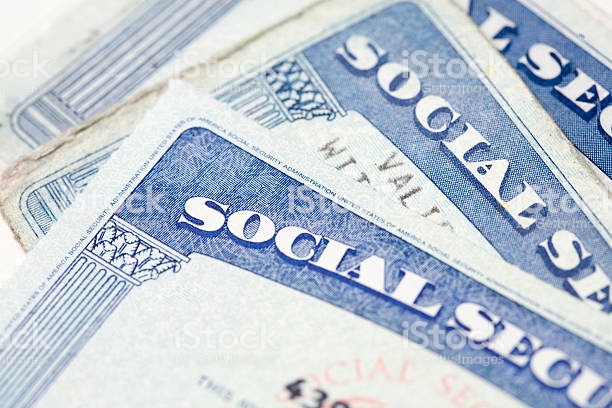
      The news this week for us seniors:  It was just announced that Social Security benefits for next year will increase by 8.7%. That comes after a 5.9% increase for 2022. The average monthly benefit for a retired worker currently stands at $1,660. So the average retiree will get an increase of a little over $140, to about $1,800 per month.

     That's pretty good when you consider that, according to The Conference Board, a nonprofit business think tank, the average U. S. salary increased by only 4.1% in 2022, and is expected to rise 4.3% in 2023.

     That's the good news for seniors. But there's always a catch, isn't there? For one, the bump-up in benefits could affect people who receive low-income subsidies for health care, meaning reduced amounts of assistance. The increase could also lead to cutbacks in income-related benefits such as SNAP and low-income rental assistance. By one estimate, about 40% of those receiving low-income benefits will see some reduction in at least one assistance program. 

     Others could see their incomes increase to the point where they have to pay income tax on their benefits. It gets complicated, but the basics are:  as an individual, if your income is above $25,000 a year -- or $32,000 for a joint return -- you are liable for federal tax on a portion of your income. If your individual income is above $34,000, or joint income above $44,000, then 85% of your benefits are subject to tax.

     Unfortunately, these thresholds were established in 1986 and never adjusted for inflation. So in 1986 some 15% of beneficiaries paid income tax on their benefits; today 56% of Social Security recipients owe taxes on their benefits.

     Then there are Medicare premiums. Those increases have not been announced yet. They went up by 14.5% for this year. There's some talk they will not go up at all for next year, or could even go down, due to the large increase last year. But who knows at this point. 

     In addition, a jump in Social Security benefits could push your income up to the point where you'll have to pay a surcharge for Parts B and D of Medicare. Currently, the level that triggers the extra charge is $97,000 for an individual, and $194,000 for joint filers.

     Still and all, we're glad to see an increase in benefits, even if our "take-home pay" is less than our gross pay. But there is one other bugaboo. The 8.7% increase to current and future retirees means more money is flowing out of the system. That in turn could mean Social Security reserves will run out of money sooner than 2034, which is the current estimate.

     Currently, about 90% of benefits are paid out of payroll taxes. The rest comes from the infamous "lockbox" of the Social Security trust fund. If the economy goes into recession, as many are expecting, higher unemployment will mean a drop in funding from payroll taxes.

     But no one knows for sure. Even if some jobs are lost, if wages rise next year, that will mean more payroll tax is collected. And also, the maximum amount of earnings subject to payroll tax will increase next year from $147,000 to $160,200 -- another source of more funds for Social Security.

     Social Security is a great program, keeping many seniors out of poverty, and bolstering the incomes of many others, allowing us retirees to hang onto our middle class standard of living. But there are no guarantees. For every push there's a pull. We manage as best we can.  

Sunday, October 9, 2022

Words of Wisdom

     I don't know about you, but I sometimes wonder what getting old is all about. The whole notion seems strange to me. Why do I find myself taking a nap in the afternoon? Those little bumps and bruises that show up on my body -- where do they come from? Why don't people speak a little louder . . . and maybe talk a little more slowly? And most of all: who is that stranger staring back at me from the mirror?

     When I'm confused about life, or questioning what's happening to the world, I usually go back to the writers and philosophers who guided me earlier in life. So here are a few quotes about aging from people smarter than I am. Some of them are funny, some inspirational, some comforting. And . . . maybe you have a favorite quote of your own?

     "The older we get the fewer things seem worth waiting in line for."  -- Will Rogers 

     "To get back to my youth I would do anything in the world except exercise, get up early, or be respectable."  -- Oscar Wilde

     "Old age is like a plane flying through a storm. Once you are aboard there is nothing you can do about it."  -- Golda Meir

     "The older I get, the more clearly I remember things that never happened."  -- Mark Twain

     "Always be nice to your children, because they are the ones who will choose your retirement home."  -- Phyllis Diller

     "Getting old is like climbing a mountain. You get a little out of breath, but the view is much better!"  -- Ingrid Bergman

     "You can live to be a hundred, if you give up all things that make you want to live to be a hundred."  -- Woody Allen

   "It's paradoxical that the idea of living a long life appeals to everyone, but the idea of getting old doesn't appeal to anyone."  -- Andy Rooney

     "The older I get, the better I used to be."  -- Lee Travino

     "I was thinking about how people seem to read the Bible a lot more as they get older, and then it dawned on me -- they're cramming for their final exam."  -- George Carlin

     "I don't feel old. I don't feel anything until noon. Then it's time for my nap."  -- Bob Hope

     "I have reached an age when, if someone tells me to wear socks, I don't have to."  --  Albert Einstein

     "When your friends begin to flatter you on how young you look, it's a sure sign you're getting old."  -- Mark Twain

     "The idea is to die young as late as possible."  -- Ashley Montagu

     "You don't stop laughing when you grow old, you grow old when you stop laughing." -- George Bernard Shaw