"I can't be a pessimist, because I'm alive. To be a pessimist means that you have agreed that human life is an academic matter." -- James Baldwin

Friday, September 15, 2017

What's Important?

     I've taken several trips lately, spending a lot of time behind the wheel of my car, which has offered me plenty of time to think about things.

     Given the news, it's hard not to think about the current political turmoil. But the fact is, political turmoil has been with us for our entire history, so what's going on today is nothing out of the ordinary, nothing particularly threatening. Things were much more fractious in the mid-1800s, in the 1930s, even in the 1960s.

    So why do we think we're so divided when we all (or most of us) get along just fine with our neighbors, and local politics is generally boring and run-of-the mill? If you watch the TV news, you are bombarded with controversy, because controversy is what drives ratings. The news loves controversy, encourages controversy, and will manufacture controversy if it doesn't already exist. But most of what's in the news is not important -- political maneuvering, celebrity posturing, sports competitions. The news -- and those who influence the news -- know that if you want to get attention, you start an argument.

How can you argue with that?
     But if we step back -- well, I'm in my car, so I'm only stepping back figuratively speaking -- I think we should focus not on the ephemeral news, but on what's most important. And by my measure, what should most concern us is what is most likely to kill us. Here, by my sights, are two of the threats in our current social climate that are near the top (along with a postscript). I'll save the most deadly issue for next time (with another postscript).

     We've just suffered two major hurricanes. Now we all know there is no direct link between global warming and any particular storm. But come on. It doesn't take a genius to connect the dots.

     My house is 300 feet above sea level, so I won't be directly affected by the rising waters caused by global warming. But the heat waves, crop failures, wildfires and increasingly violent storms might kill my children or grandchildren.

     If you're not sufficiently scared about the problem take a look at The Uninhabitable Earth, which paints a horrifying picture of what is already happening. The piece also confronts some frightening issues of the future, including the possibility that deadly bugs and bacteria trapped in the Arctic ice will be unleashed on humankind as the ice slowly melts.

     This view might be an exaggeration . . . I hope it is! But as I say to climate-change deniers: If the global warmists are wrong, the costs are minimal. All we lose are a few coal mines, and we get cleaner air in the process. But if you deniers are wrong . . . our grandchildren will drown, burn, starve and suffocate to death.

     Don't you think that the news -- and our politicians -- should be more concerned about global warming than they are about who's insulted by Donald Trump's latest tweet, who's riding on the presidential plane . . . or who is coming or going on DWTS?

     The other existential danger that we face has been in the news lately, but the issue now seems to be treated more like business-as-usual. Another incident occurred just yesterday. North Korea. Its leadership is flexing its nuclear muscles, testing atomic bombs, launching missiles over Japan.

     But North Korea is not the only nuclear threat. Remember the arguments over a potentially nuclear Iran? President Obama negotiated a treaty. We can only hope that the Iranians are honoring their part of the agreement, and that President Trump will hold up our end of the bargain.

     There's also Pakistan, another nuclear power. Pakistan is not exactly the most stable country in the world. Then there's the possibility that Islamists or some other rogue group will get their hands on a nuclear weapon and set it off in a major city. Maybe even before global warming will kill us, we will be exterminated in a nuclear holocaust. Of course, we've been living with threat this our whole lives. But just because it hasn't happened doesn't mean it can't happen.

     These are two big issues that we can't afford to ignore. I'll bring you the biggest, the deadliest, next time. But meanwhile, here's a postscript. According to The Week magazine, some 32,000 Americans die every year from falls. Guess which age group suffers the most?

     I don't know what the politicians can do about the problem. But there is something we can do. And you know what it is: Install grab bars in the bathroom. Get rid of throw rugs. Install more lighting on stairs and entrances. If the politicians can't keep us safe, at least we can do for ourselves.
   

Monday, September 11, 2017

A Seasonal Change

     The change of seasons brings many things to many people. Unfortunately, September has brought catastrophic hurricanes to both Texas and Florida. Our hearts go out to the people whose lives have been upended by the storms.

     September has brought something very different to my new hometown: the annual arts and crafts festival, which includes the Thompson Bucks County Classic bike race. There was a race for the kids; one for women; one for amateurs and one for professionals. There was also an antique bike race . . . an exercise that is harder than it looks. There are no gears on these bikes, and if you fall down you have a long way to go.

     Meryl Baer of Six Decades and Counting also reflects on the changing of the season. Soon she will transfer potted plants indoors. Mobiles will be taken down and locked away until spring. Outdoor chairs will be stacked in the garage. "The grill should be stored in the garage," she says in Fall Is in the Air. "But too often we forget, leaving it out until biting rain or snow surprises."

Lining up for the race
     Meanwhile, Laura Lee Carter has been searching for freedom for a lot longer than a season or two. Most of us, she points out, don't have a clue about who we really are until we get older. We have made so many compromises to conform to society, family and every other person around us for decades. We know all the rules. They are ingrained into our souls. The Buddhists call this "armoring": the persona we put on each morning in order to interact peacefully with those around us. This is how we keep our Self in check.
 
     But if you're tired of keeping your Self in check, and want some help in finding the courage to break the rules set up by other people, take an honest look at Find Your Own Personal Freedom.

     Sometimes however, even Carter admits, life gets in the way of freedom, as it did for her last week when her husband fell ill. They had to cancel their anniversary trip. But as the saying goes, when one door closes, another door opens. And so as she tells us in Life in a Small Town, she used her unexpected free time to make a new friend, sell some books, and look forward to Octoberfest.

     We all like the freedom of using credit cards and other payment systems to make our lives easier. But these days we have to be careful. On the Survive and Thrive Boomer Guide, Rita R. Robison reports that Equifax, one of the nation’s three major credit reporting agencies, has experienced a data breach that exposed people’s names, Social Security numbers, birth dates, addresses and, in some cases, the driver’s license numbers of 143 million American consumers. Robison then offers tips on what to do about the Equifax breach, to keep ourselves and our families safe as we head back to school, to work, to all the other things we do in the fall.

    Kathy Gottberg also has some great advice for of us, about how we can be free to be ourselves, from a book called Your No Fear Career by Robin Fisher Roffer. Gottberg's post on Smart Living 365 contains nuggets of ideas that will benefit anyone, of any age, who is looking to live boldly instead of turning into a dancing bear.

     She asks: What good does it do to focus on what we can't do, what we did wrong in the past, or what limitations we may have? Instead of being apologetic for our shortcomings, we should accept and even celebrate both our weaknesses and our strengths, for all together they make us the unique individual that we are. She goes on to suggest that if you are hard on yourself, others will be hard on you, whereas if you come from a place of strength and self-confidence, your relationships will be strong. In general, people accept you as much as you accept yourself.

     But, to find out what a dancing bear is, you'll just have to go over to her blog post Living Fearlessly and Refusing to Be a Dancing Bear and find out for yourself.

     Finally, Carol Cassara on Heart, Mind, Soul reminds us in her post Compassion Exercise that the world is crying out for compassion. This is certainly true today in Florida and Texas. It's true every day in Africa and Asia . . . and in our own backyards. Cassara offers a new way to look at people, a way that will help you "Use your voice for kindness, your hands for charity, your mind for truth, and your heart for love."

Thursday, September 7, 2017

I Was Wrong

     . . . about two things. First, I said in my recent post Reading Between the Lines that none of the qualifiers would make it past the first or second round in the U. S. Open. Well, last night I turned on the TV and was surprised to find Kaia Kanepi playing at Arthur Ashe stadium. She had made the quarterfinals!

     She was beaten quite handily by 22-year-old Madison Keys of the United States. Nevertheless, that's a fantastic run for the woman from Estonia who was ranked No. 421 in the world coming into this tournament.

     The other error:  I said the Americans are not as strong as they used to be in the top ranks of professional tennis. We remember Billie Jean King, Jimmy Connors, John McEnroe, Chrissy Evert. Well, I was right about the men. This year the U. S. Open semifinals feature no Americans. Instead, there are two players from Spain, one from South Africa and one from Argentina.

     But the women have come through, big time, for the United States. The women's semifinals promise an all-American event. Tonight 37-year-old Venus Williams, who won the Open back in 2000 and in 2001, will play fellow Floridian 24-year-old Sloane Stephens for a berth in the final round. In the other bracket Madison Keys, also from Florida, will go up against the volatile 25-year-old, CoCo Vandeweghe from California.

     These should be great matches. Given my track record, I will not try to predict who's going to win, much less who's going to fight her way to the championship on Saturday . . . other than that the winner will be an American.

     As for the real message of "Reading Between the Lines," a shared interest in a sport is a great way for us parents to stay connected with our grownup children -- whether the sport is tennis, baseball, football or anything else. Last week I did not meet my son on the tennis court. We instead met for a round of golf -- another opportunity to spend some quality time with my 30-year-old child.

Tuesday, September 5, 2017

Remember These Brands?

     On the way to the beach the other day we passed Bordentown, NJ. That prompted B to ask, "I wonder if that has anything to do with Borden milk. Remember Borden's milk?"

     "Sure," I replied. "Elsie the cow. We got it delivered to our front door every morning when we were kids."

     And that got us reminiscing about the brands we knew as kids that are no longer around. Or maybe they still exist somewhere (as does Borden; I checked) but you just don't see them anymore. B pointed out that milk companies are fairly local, so Borden's must have only been around the New York area. As was Korvettes discount store, which became Caldor's. Both long gone. And Bradlees in New England. Then there was Schrafft's, the restaurant and candy maker. Did you ever go to a Horn & Hardart automat?

     But we also recalled the cars. Pontiac and Oldsmobile. Studebaker. My parents had a Studebaker when I was a little kid. Later on we had a Nash Rambler. So did B's family. We recalled the push-button transmission, and just how awful that car was. But as teenagers we didn't care. The car got us around . . . as long as we didn't have to go uphill.

     What about the airlines. Pan Am was the first to fly regularly scheduled jets across the Atlantic in the mid-1950s. But then I remember a friend of mine getting laid off from Pan Am, in the mid-1980s, when it was jetting toward bankruptcy. There was TWA, Eastern, Braniff. Remember Laker? All gone.

     B wondered if Tang is still around. "I used to love Tang," she said wistfully. I don't know about Tang, but I used to guzzle 7-Up like a camel. When was the last time you drank a 7-Up? Then I suddenly found myself singing . . . Brusha, brusha, brusha ... new Ipana toothpaste. But now that we're older, we all use Sensodyne ProNamel, since our teeth are sensitive and our gums are receding.

     Magazines. Whose family didn't subscribe to Life or Look, or the Reader's Digest or Saturday Evening Post?

     I remember Christmas, circa 1965, when we got a Polaroid instant camera. Who among us didn't type their term papers on a Smith Corona? Or spin a Decca record on a Motorola or Garrard record player? But these are more changes in technology than simply brand name.

     Of course, many more brands are still with us, and have outlasted all the vicissitudes of history. My dad ate Wheaties every morning for breakfast. You can still find Wheaties on the grocery store shelf. After we got rid of the Studebaker, my parents drove a Buick for years. Buick is still around. Apparently Buick has actually made a comeback and is now once again considered a good car.

     The VW bug went away and then came back, as did the Ford Thunderbird and Ford Mustang -- although the latter may have been a mistake. The Mustang had many fans; but it was a cheap car that tended to fishtail when rounding curves or corners.

     So I guess we've made some progress. Remember "Winston tastes good like a cigarette should"? Now you've got to look under a rock to find a Winston. Or a Kent, a Lark, a True, a Tareyton, a Chesterfield or Old Gold.

     And today the cool car is a Prius or Tesla with seatbelts and airbags, instead of a Corvair or Ford Pinto -- either one of which could explode and send you to a place where you no longer have to bother with brusha, brusha, brusha.

Friday, September 1, 2017

One Great Thing About Retirement . . .

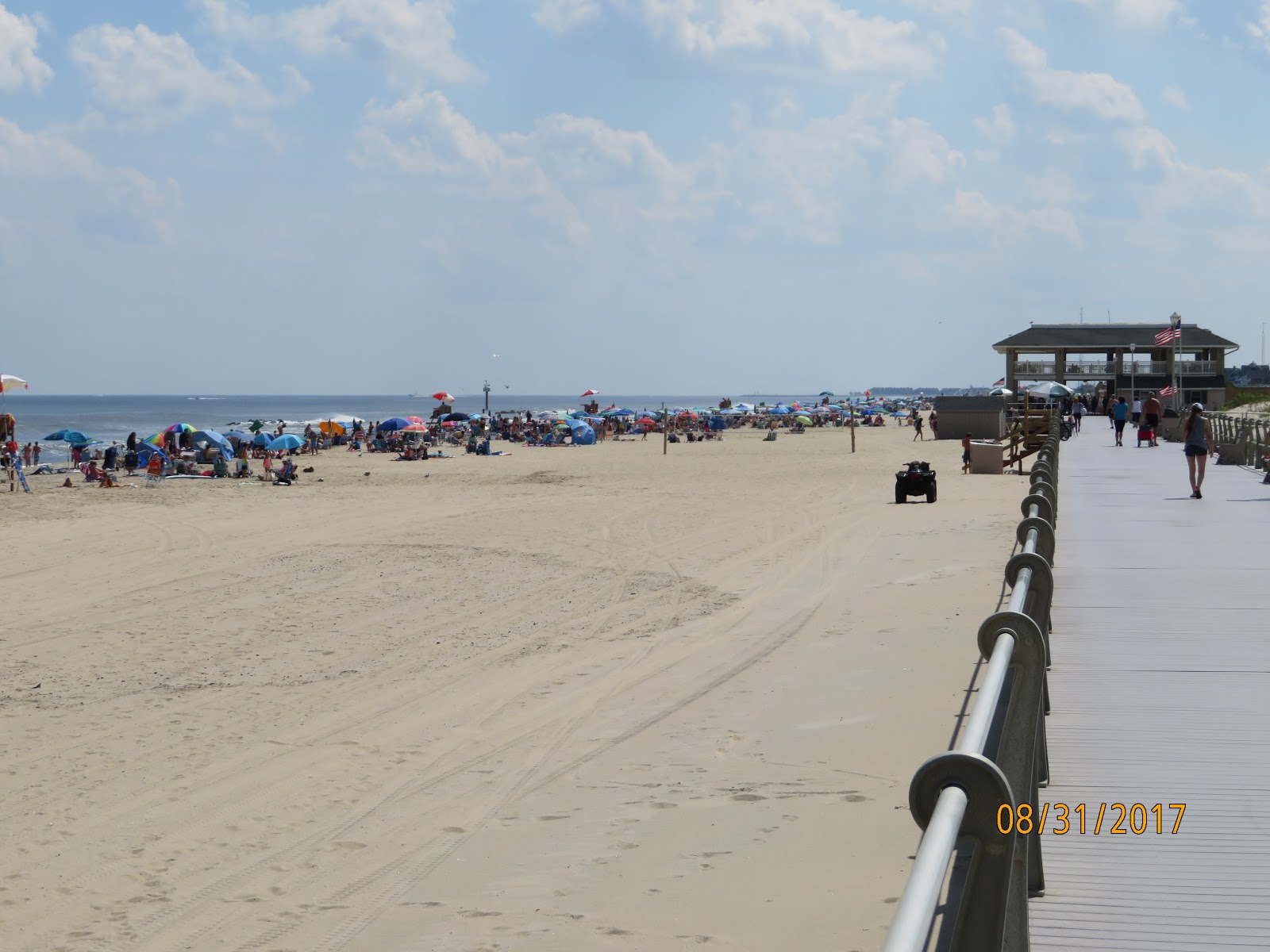
     Is that you can go wherever you want, whenever you want. Which means you can wait until a beautiful sunny day during the week, then make a quick trip over to the beach to beat the crowds and enjoy the sun and surf. In our case the day was Thursday, and the place was Spring Lake on the Jersey Shore.

     The drive took us a little over an hour. We stopped for a late breakfast before hitting the beach around 11 a.m. Even at that time -- remember it's during the week, toward the end of summer -- parking was free and easy to find.


     There were plenty of people on the beach, but it wasn't too crowded.


     The waves were high, as much as six or seven feet . . .


     And so the surfers were out . . .


     Some of them even made it look easy.


     A few bathing beauties graced the shore as well.


     But it wasn't so rough that a fishing boat couldn't be trolling offshore . . .


     And one or two seagulls couldn't be fishing on shore.


     So for now, it's not goodbye summer; just goodbye to the beach for the day.