"I can't be a pessimist, because I'm alive. To be a pessimist means that you have agreed that human life is an academic matter." -- James Baldwin

Tuesday, July 30, 2024

The New Sunbelt

     I retired to Pennsylvania because we had some family in the area, the cost of living is less than our old home in metropolitan New York, the winters are a little warmer, and it's not so far away that we had to adjust to a different landscape, or a strange new lifestyle.

     My one fear about moving to Pennsylvania was that there wouldn't be other older people for us to make friends. I thought: They've all moved to Florida! And somehow it seemed dispiriting to be moving into a place where everyone else was moving out.

     Well, I actually found there are plenty of people who haven't moved to Florida. Lots of seniors are still around to populate the pickleball courts, attend the theater and musical venues, participate in the senior learning programs.

     I saw an article last week Are Snowbirds Coming Home? by CNBC's Kelly Evans. She says the 2020s could mark the end of an era "for the snowbelt-to-sunbelt migration which has been the distinctive feature of U. S. population shifts over the past 50 years."

     Why? The South is getting too hot.

     Today's most popular place to retire is Florida. Warm weather. Low taxes. Lots of golf courses. Plenty of beaches. What's not to like? Florida is followed by Arizona, then Texas and the Carolinas.

     But now Florida and Texas are pummeled by more and more tropical storms. And Arizona is roasting in 110-degree heat.

     In addition to heat and storms, many Sunbelt cities are plagued with rising home-insurance premiums and home-repair costs, along with more and more traffic. Also, real-estate prices have soared, negating much of the cost savings of relocating from the North. 

     So will retirees really want to move into an area where rising flood waters force them to evacuate? Will they want to bake in the hot sun of the Southwest? And then have to pay extra for the pleasure?

     Climate journalist Abraham Lustgarten says that because the climate is getting hotter, Buffalo, NY (believe it or not!), "may feel in a few decades like Tempe, Ariz., does today." Meanwhile, Tempe will be sweating in 120-degree temperatures.

     He also says that fresh water will be in short supply throughout the West and much of the South. Megafires will threaten the Sunbelt from Georgia to Texas to California.

The Old Sunbelt
     Rising sea levels will chew up shorelines along the East and Gulf coasts, swamping many areas and infiltrating underground aquifers. One estimate projects high water will force 13 million Americans to move away from the coast.

     So now experts predict the recent migration of retirees toward the coasts, and toward warmer weather, will reverse. Instead of retiring to Florida or Arizona, people will head north. They will seek cooler summers. They will avoid fire-prone regions and shy away from low-lying areas subject to flooding.

     In fact, the U. S. population is already starting to respond. Houston and other smaller Sunbelt cities have actually been losing population. Even Phoenix, while not yet losing population, has seen its growth slow dramatically.

     So where are people going to retire? Kelly Evans suggests the Midwest, where the cost-of-living remains more affordable, winters will be less severe, and summers will offer beautiful 80-degree afternoons. She says Cleveland may be a draw for future retirees.

     Jesse Keenan, a Harvard climate professor, points to Duluth, Minn. as a promising location. The land of a thousand lakes already ranks high on many retirement lists for its low crime rate and great medical care (think Mayo Clinic).

The New Sunbelt

     Lustgarten also says the migration from California to coastal Oregon and Washington will likely continue as people look for a more temperate climate. And the Northwest poses less risk from rising sea levels.

     Wisconsin and Michigan offer a climate that will only get more temperate, verdant and inviting. Lustgarten predicts a renaissance for currently downtrodden Detroit. 

     Vermont, Maine and upstate New York may also attract more retirees, for the same reasons. Will Buffalo become the new Boca Raton? Syracuse the new San Diego?

     Maybe that's getting ahead of things. But I did see one figure recently. After experiencing small population declines earlier in the 2000s, Pennsylvania is starting to grow again, led by gains in the area where I live, the southeastern part of the state around Philadelphia.

     Which reminds me. Last winter, for the first time, we didn't have to call out the snowplow, not even once.

Sunday, May 5, 2024

What Happened to Tom?

     I haven't posted for a long time. But I'm inspired by Confessions of a Grandma. Like me, she hasn't been blogging lately. But recently she brought us up-to-date on her life and times. Spoiler alert: She seems very active and happy in Florida.

     As for me, I've been doing the things that retired people normally do. 

     This past winter my wife and I spent several weeks in South Carolina visiting family -- well, mostly for the grandchildren. We played games, read books to the kids, went to the playground. We attended a 5th birthday party. Now we're heading to Wisconsin at the end of May to see other grandchildren. Yes, we are old. But we're not stupid. South Carolina in February. Wisconsin in June.

     Like everyone else, we're spending more time at the doctor's office these days. Don't ya' love those colonoscopies!?! I just got a shot of Cortisone in my knees. The orthopedic surgeon wants to replace my left knee. He says it's easy. In and out the same day. I'm walking the next day. But I know there's some heavy physical therapy that goes along with a knee replacement, and I also know one or two people who have had complications. So I'm not rushing into anything. Tomorrow I have a dentist appointment. Oh, cheers!

     The golf season has started up where I live. I've played three times so far. And I'm glad to report that I've gotten better each time. Of course, now I play from the senior tees, which makes it easier, but still . . . it's satisfying to know I can still improve at this age. I also know that golf is a diabolical game, so I can get worse at any moment, with the single swing of a club.

     I used to play Ping Pong (properly known as table tennis). Then I switched over to Pickleball. But recently I've gone back to Ping Pong. It's easier on the knees. We have a club that plays every Monday night.

     I continue volunteering at our local senior learning center. I taught a course on the history of the 1960s. I found it, well, simply amazing to relive those historic times of Kennedy and Nixon, Johnson and Humphrey, King and all the sometimes-misguided but always courageous people who protested about civil rights, student rights, the Vietnam war, and other deeply felt issues.

     My wife and I also do a course on current foreign policy. And I'm taking an oceanography course which is kind of fun, but sometimes scientifically over my head (so to speak).

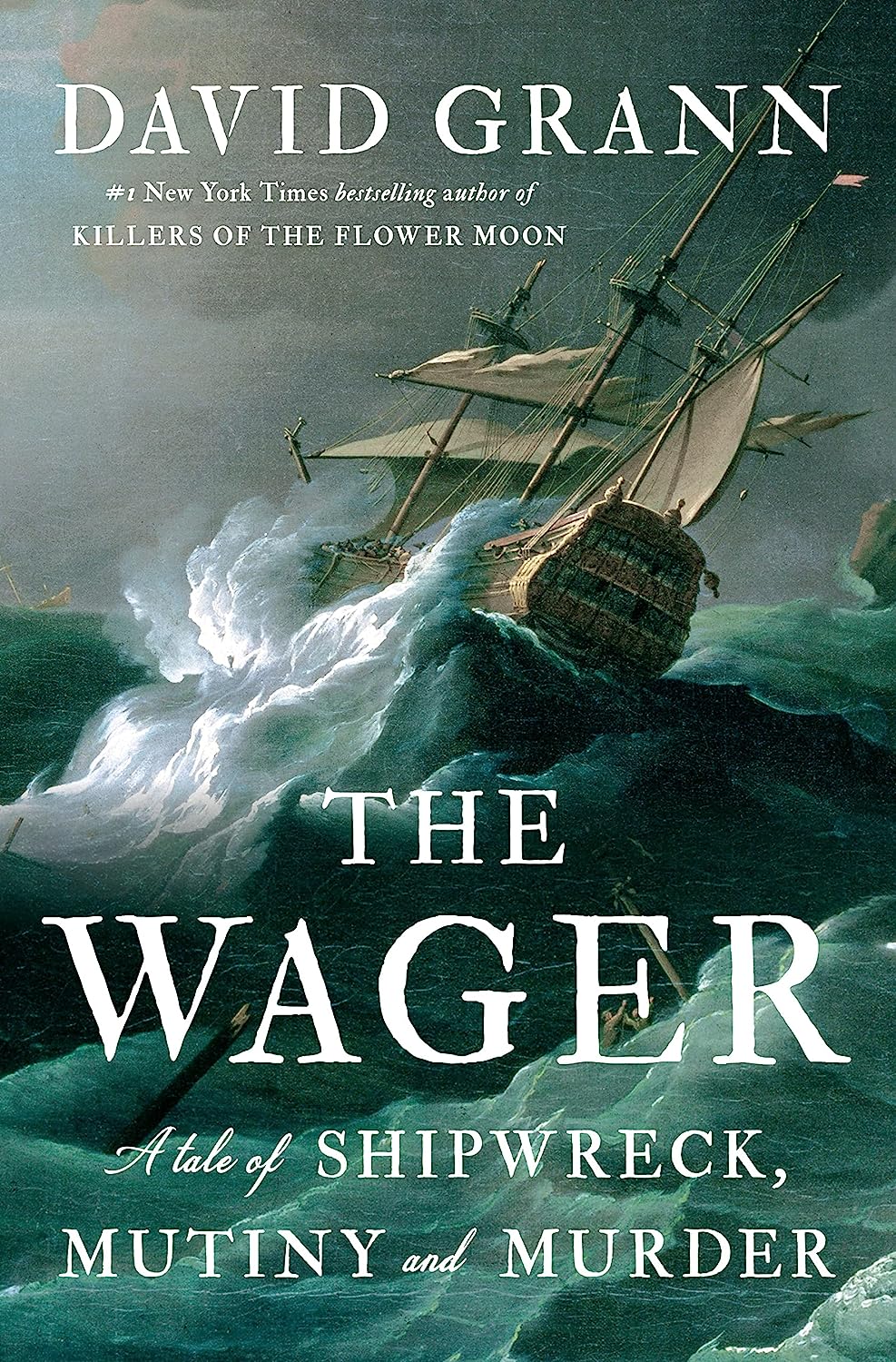
     I'm in a book group. This spring we've read: The Wager: A Tale of Shipwreck, Mutiny and Murder by David Grann. It's a harrowing true story of an 18th century shipwreck off the coast of South America. I highly recommend.

     The River of Doubt: Theodore Roosevelt's Darkest Journey by Candice Millard. Another true story. Roosevelt, after he lost his comeback bid for the presidency, traverses an unknown tributary to the Amazon. Candice Millard has written several historical narratives, and they are all good.

     Chenneville by Paulette Jiles, a novel about a Civil War veteran tracking down a murderer in Texas. It didn't do that much for me.

     And North Woods by Daniel Mason, a novel about a house in New England. The book gets great reviews. But I found it uneven -- some of the stories are interesting, others not so much.

     I've read some other books I could recommend. Tomorrow and Tomorrow and Tomorrow by Gabrielle Zevin is kind of weird, but fun. The Hunter is the latest Tana French novel, and I am definitely a Tana French fan. And I'm now deep into An Unfinished Love Story: A Personal History of the 1960s by Doris Kearns Goodwin who is not only a great historian but an engaging writer as well.

     We've also watched our share of Netflix and Amazon prime. But I won't get into any specific recommendations. It's relaxing to sit down and watch something at the end of the day, but there was nothing spectacular. After all, it's just TV.

     Anyhow, that's what I've been up to lately. I hope everyone is healthy, and engaged with family and friends, and doing something interesting every once in a while.

Tuesday, January 9, 2024

Bigger and Badder SUVs

     My wife and I know enough not to go out on the road on New Year's Eve. But we don't always know enough not to drive when the weather gets bad.

     My wife B desperately wanted to drive up to New Jersey to see her grandkids the other day, especially since her last trip was canceled when her son and granddaughter got sick.

     But then the weather report turned bad. A storm was coming in, bringing snow overnight, then turning to rain. It was supposed to stop, so B thought she could still make the drive. But she really didn't want to be out on the highway with the trucks and the speeders and the possibly icy conditions.

      I offered to go with her. But what I really thought was that she should cancel the trip. And, finally, she did. Which was a good thing, because the rain and slush lasted throughout the entire day. It would have been a miserable and dangerous drive.

     But the honest truth is, I don't like to drive at all anymore, except maybe around town and on an occasional back road. I don't like the speeders, the tailgaters, the horn honkers, the distracted and aggressive drivers.

     The fact is, American roads are more dangerous than they have been in years, as reported in a recent CNN article This Cultural Touchstone Is Killing Far Too Many Americans. 

     Automobile deaths peaked in the late 1970s and stayed high through the 1980s. Then they started to go down, due largely to seatbelts, airbags and other safety measures. But starting around 2012 they began to go up again. And they've been increasing pretty steadily ever since, for the past decade.

     In 2011, a little over 32,000 Americans lost their lives in car crashes. By 2022, auto deaths rose to more than 42,000. And in 2023, when the final figures come in, deaths will almost certainly be higher than 2022.

     According to the CNN article, high and increasing vehicle fatalities are a  particularly American problem. Why? Well, there are the issues mentioned above -- speeding, tailgating, distracted driving. But another significant factor is the extra large cars and SUVs that we now drive -- vehicles that are getting larger and larger with each new model year.

SUVs keep getting bigger and badder

     Tall trucks and SUVs with blunt hoods are particularly dangerous -- 45% more likely to kill pedestrians than smaller vehicles. That's because the hoods block driver views, creating blind spots in front of the car.

     Also, SUVs are heavier than they used to be, which is especially bad news for pedestrians, motorcyclists, cyclists and people in smaller cars. Just as an example, 2022 saw the largest number of pedestrians killed in America in more than 40 years.

     The bigger SUVs may be marginally safer for the drivers and their passengers. But they turn out to be weapons against anyone sharing the road with them. The heavier vehicles are also harder on the roads, which we all pay to maintain. And they consume more fuel which creates more pollution and drives up the price of gas.

     Maybe it's time . . . well, the answer is obvious. If government safety agencies won't do anything about it, there's no reason why we should buy or drive those big behemoths.

     Oh, also . . . school's back open, drive carefully.

Monday, November 20, 2023

How Not to Be Cool

     I was recently a guest on the podcast Awe-Inspired and Retired. We talked about all things retirement, from where we're going to live, to what we're going to do, to who we're going to do it with . . . or what we called the "three likes" of retirement.

     (You can now listen to both of the podcasts I've done using the links under "Retirement Podcasts" on the right hand side of the blog.)

     Anyway, toward the end of the conversation, hosts Caleb Miller and Riley Anderson brought up the subject of "tribes." Apparently, some of their previous guests, talking about retirement, suggested that, after we're done working and raising a family, we have to find a new place in life, find what they call a new tribe.

     Okay, that sounds reasonable.

     Or maybe retirees have more than one tribe. Actually, we all probably have different tribes in our lives -- with different people for different reasons. In my own case, I have my golf group, and my senior learning colleagues, and my "old friends" from back home. My wife and I have our couple friends. And we have, basically, two families (hers and mine, since we're both second spouses). 

     And then the hosts asked me, What's the tribe that everyone wants to be a part of? You know, the group where people are saying, "Yeah, I want to be in that tribe. I want to be with these kinds of people."

     The presumption is, maybe we feel left out of some group -- some group we think is cool -- that seems to enjoy a life that's easier, or richer, or somehow better. Maybe it's some special lunch group, or maybe the elders at church, or the crowd at the theater, or the board of the condo association. Or maybe we envy friends who retired to Florida or Arizona, or even abroad, because they are more adventurous than we are. 

     So, they asked me, is there a tribe where you say, "Gee, I wish I could join that group."

     The question made me chuckle. Because my answer is a definite: "No."

     The reason is, when I was a kid, through high school and beyond, all I wanted to do was be cool . . . be in the cool crowd. But in reality, as I've discovered over the years, the last thing you want to do is be cool. You don't want to be part of the tribe that everyone else wants to join. Instead, you want to be in your own tribe. People who you like, who do the weird things that you like to do, who accept you for who you are.

     And you do not want to be envious of some other cool people who may be richer than you, or more intellectual, or more artsy, or more sporty or more adventurous -- whether they're in town, or in church, or at the senior center, or living somewhere else. You just don't want to get into that.

     I am very anti-cool. And if you don't believe me, just ask my kids.

Saturday, October 21, 2023

Choices in Retirement

     For the most part I have stopped bogging because . . . well, because I've gone on to other things. I'm more involved in my local center for learning in retirement. I've taken up pickleball. I still play golf. I do my daily back stretches and leg exercises. 

     My wife and I have noted that as we've gotten older, just taking care of ourselves seems to eat up most of our time. Going for walks, doing our physical therapy, making doctor appointments, brushing and flossing, trying to eat right, getting enough sleep . . . it's exhausting! 

     But the real reason I've cut back on my blog activities is . . . well, I don't know, I just feel like my posts were beginning to repeat themselves. Why go to all the effort just to say what I've already said before?

     However, I still do like to check in on my blogging friends now and then, to see what you all are up to. And I've kept the blog "live" just in case anyone stumbles onto the site and wants to check out my take on "health, finance, retirement, grown-up children and . . . how time flies." Some posts may be dated, but others still seem relevant and may prove helpful to someone, somehow.

     Also, over the years I have collected a number of links to websites that offer information, inspiration, research and entertainment geared to people over age 60. You'll find this list of Retirement Resources down on the right hand side of the blog, below More Grownup Voices. I've found many of these sites to be helpful, and so I encourage you to check them out.

     For travelers there's a link to Roads Scholar and National Geographic. For lifelong learners there's a link to the Osher foundation. Volunteers might find an opportunity through Volunteer Match.

     I also have some of the standard sites for seniors, such as the AARP site, links to the New York Times, U. S. News Retirement and others.

     There are also links to more offbeat sites, like the sometimes-humorous Manopause, which bills itself as a place for "men over 50 and the people who love them." 

     Another interesting site is The Legacy Project run by Karl Pillemer, professor of gerontology at Cornell University. He has interviewed more than 1500 Americans over age 70, and he shares some of their memories, wisdom and advice, all appropriate for the rest of us.

     For those who are academically inclined, I've posted a number of links to universities that sponsor research on aging and retirement. The Center for Retirement Research at Boston College is one well-known resource. There are also research centers at Johns Hopkins, University of Michigan, Stanford, University of South Florida, University of Utah.

     So scroll down on the right to take advantage of this trove of information, all available for free. Meanwhile, if you've run across any other useful websites that will enrich our retirement lives, I hope you'll share them with us.
 
     One more thing. I have been interviewed on the subject of retirement by the podcast Retirement Tips Radio. (Have podcasts taken over blogging?) Anyway, you can find the link at the top of the right-hand column.

     Take care. Still hope to see you around from time to time.

Saturday, September 16, 2023

Notes from the American Road

     We just got home from a road trip -- three weeks from Philadelphia to Madison, WI, then back through Canada and upstate New York to a family gathering near Boston. We drove 2,500 miles in all. Oh ... my aching back!

     Aside from the reminder about my arthritic back and knees, here are a few things I noticed about being on the road in America.

     People are still speeding. There are stretches of road in Michigan where the speed limit is 75 mph. That seems awfully fast to me. But there are plenty of places around metropolitan areas and construction zones where the speed limit is 55 mph -- and people are still driving 75 mph!

     And when some people are driving 75 in a 55 zone -- or even 65 in a 55 zone -- they're passing on the right, cutting in and out of lanes, and generally making the road less safe for all of us. They're also using up a lot of gas, and spewing out more than their share of carbon dioxide and other pollutants from their car exhaust.

     Yes, there are a lot of construction zones. That Joe Biden bi-partisan infrastructure bill is hard at work everywhere we went -- widening roads, replacing bridges, repaving streets.

     We saw a few Teslas. But by far the majority of passenger cars are actually SUVs. Most people don't seem worried about the price -- or the consumption -- of gasoline. What does this mean for our environment?

     The trees are dying. It's hard to miss all the dead trees lining our highways. Is there some connection between and trees and SUVs? I don't know. But something is wrong.

     America grows a lot of corn.  As you drive through Pennsylvania, Ohio, Indiana, Michigan and Wisconsin, you see acres and acres of corn growing in the fields. I mean . . . a lot of corn! I'm told most of it is not for human consumption, but feed for the animals. There must be a lot of cows out there, a lot of beef being consumed by the American public.

     But ya' know, red meat's not all that good for you . . . or at least, too much red meat. Maybe we'd all be better off if we cut out the middle man, skipped the cow, and just ate the corn ourselves. (I admit my bias. I love corn, especially corn-on-the-cob in the summertime.)

     The worst traffic is . . . where? My sister-in-law who lives in a Boston suburb told us that Boston has the fourth worst traffic in the world. The world! My sister-in-law is prone to exaggeration. We drove through Boston twice, and both times sailed right through, no problem. I maintained that Chicago has the worst traffic in America. I drove through Chicago in 2021. It was miserable. And I vowed never to do it again. Instead, on our way to Wisconsin, we avoided Chicago by driving to Muskegon, MI, and taking the ferry across Lake Michigan to Milwaukee. It's a fun boat ride.

View of Milwaukee from Lake Michigan

     From my experience, after Chicago, it's Washington, DC that has the worst traffic. But anyway, I looked it up. According to U. S. News, Chicago does have the worst traffic in America. Boston has the second worst. Washington, DC, comes in 8th worst.

     The worst highway traffic we found outside of cities was on Route 287 in New Jersey, and surprisingly, Routes 402 and 401 going through southern Ontario from Port Huron, MI, to Toronto. The traffic is 80% trucks. Or seems like it. We felt like an ant among elephants. 

     It's expensive to travel! We like to stay in a Hampton Inn. It's the cheapest nice hotel, I like to say. On last year's trip to Wisconsin, the various Hampton Inns were averaging about $120 a night, plus taxes. On this trip, they averaged $190 a night, plus taxes. That's more than a 50% increase in one year. Our nightly hotel bill was typically over $200. (We stayed in an Airbnb for a week in Wisconsin; that wasn't cheap either.)

     The other thing is that for the extra money, you get less service. Admittedly, it's hard for hoteliers to get people to work for them. Still, the hotels were not as clean or as well-kept-up as they were last year. Our Hampton Inn in Muskegon had mildew in the shower, caulking that was falling apart, a refrigerator they had neglected to plug in, a scaled-back breakfast . . . and for that they charged $195 + tax for a total of $216.47. 

     In Canada I had booked the wrong day, and when I went to change the reservation I was told: You missed the cancellation deadline. They charged us the full amount for the extra night. So we stayed one night, but had to pay for two. Arghh!

     Was it all worth it? Of course. My credit-card bill will be astronomical. But I got to spend time with my daughter and granddaughter in Wisconsin. We saw old friends in Canada, another friend in Buffalo, and we got to attend the 80th birthday party of my brother-in-law in Boston. Travel is rewarding. It's an adventure. It can be fun. But it's not for the faint of heart.


Friday, August 18, 2023

Never Say Never

     My intention was to close down this blog (see my May 2023 post "Last Lines"), because I've written around 1200 posts, and -- good grief! -- how much can we say about Baby Boomers, retirement, or our personal lives?

     But never say never. I have a few more topics that could addressed . . . including a particular medical procedure that I last suffered through about five years ago. And after that humiliation, I said I'd never do that again!

     Well, here I am five years later, and guess what? I found myself lying on my side on a cold hospital bed, after a full day at home in the bathroom cleaning out my system. Yes, I was getting another colonoscopy.

     I've read that when you get to a certain age, they stop giving you a colonoscopy, because the reason for a colonoscopy is to find pre-cancerous polyps and get rid of them. But polyps are apparently slow-growing beasts. Once you reach age 75 or so, and you're still clean, they figure something else will get you first, even if you do get a cancerous polyp in your colon. I figure I might have one more colonoscopy to go.

     On the other end of the age spectrum, they recommend you start getting colonoscopies at age 50. In my case, I managed to delay year and had my first test -- it was actually a sigmoidoscopy -- at age 51. A sigmoidoscopy (which I don't believe they do anymore) does not use any anesthetic (yes, it hurts!), and only looks at the last few feet of your colon, where polyps are mostly likely to grow.

     When my doctor first told me about this, I was horrified. I couldn't believe that anyone would do that to me! I rushed home and called my parents, who were alive at the time. Had they ever heard of this? "Oh, yeah, sure," they responded off-handedly. "We go in every few years. The doctor usually finds something. He cuts it out, and we go about our lives. No big deal."

     Well, the doctor did find a polyp in that sigmoidoscopy. He then made me come back for a full colonoscopy. So with those two procedures, I had quite the initiation. Then I had to go back again three years later. Fortunately, that test was clean, and so I was then given a five-year reprieve.

     Now I've been through several colonoscopies. In one way this current test was easier. Instead of the gallons of dreadful-tasting drink they used to make me gag down, they prescribed two rounds of pills, chased with a couple of quarts of water over the course of an hour and a half.

     But in another way it was harder. My procedure was scheduled for 8 a.m. That meant I had to start round one at 5 p.m. the day before. Then I had to do the second round starting at 2 a.m.

     So the bottom line (forgive the pun): I was awake most of the night. But here's the thing. If I had never had my original tests, the polyp that started growing when I was 51 would probably have killed me by now. So I credit my doctor for saving my life all those years ago.

     Colon cancer is the second most common cancer killer in America today. It typically begins with the growth of a polyp, small abnormal tissue that can appear on mucus membranes. Most are benign. Some can eventually progress to cancer, but it is a slow process that usually takes five to ten years.

     The symptoms of cancer include a change in bowel habits, bleeding, anemia, bloating or unexplained fatigue. But the sneaky thing about colon cancer (like a lot of other cancers) is that the symptoms often don't show up until it's too late. So the trick is to catch it early, before symptoms show up.

     There is one non-invasive test that detects blood in the stool long before it becomes visible to the naked eye. Unfortunately, the test is not very accurate. But if you do test positive for blood, or for anyone over age 50, doctors typically recommend going the next step, which is the colonoscopy.

     There are variations on the procedure. One option is the virtual colonoscopy, done with computer imaging -- but the more recommended method involves a doctor snaking a thin tube equipped with a camera and a cutting instrument up the length of your colon. If there's a polyp . . . snip, snip, and it's gone. The procedure is done with minimal risk. Or, as the nurse in the hospital room told me, "I like this assignment, because nobody dies here."

     That was a relief. Anyway, Medicare pays for most of the procedure, especially if you have supplemental insurance like AARP United Health Care.

     So, proving that human beings can get used to almost anything, the colonoscopy has become a regular routine for me (for my wife, too). And judging by how crowded the medical office was, it's become routine for a lot of other older people as well.

     If you want to know more about colonoscopy you can check out information at the Mayo Clinic or Web MD. Meanwhile, I hope I haven't been too flip about what is really a serious disease. But, hey . . . at least I didn't include a photo!

Saturday, May 20, 2023

Last Lines

     We've all read about the last words of some famous people. For example, drummer Buddy Rich died after surgery in 1987.  As he was being prepped for the operation a nurse asked him, "Is there anything you can't take?" And he responded, "Yeah, country music."

     Or the composer Gustav Mahler who died in bed. He reportedly was conducting an imaginary orchestra. His last word was: "Mozart!"

     Basketball great "Pistol" Pete Maravich collapsed during a pickup basketball game. His last words were: "I feel fine."

     John Wayne who died in L.A. at age 72 turned to his wife and said, "Of course I know who you are. You're my girl. I love you."

     Joe DiMaggio reportedly said, "I finally get to see Marilyn."

     Then there's my favorite, from Steve Jobs. According to his sister Mona, the Apple founder's last words were, "Oh wow. Oh wow. Oh wow!"

     But famous endings go beyond last words. My favorite ending to a TV show is from The Sopranos, when the screen just goes black.

     You probably remember Mary Tyler Moore who was laid off along with her TV family, saying goodbye, then turning out the lights in the studio and walking away.

     Or Ted Danson, aka Sam Malone, turning away a customer at Cheers and saying, "Sorry, we're closed."

     My favorite last line from the movies is from the coming-of-age drama Stand By Me. The story is told as a flashback, and at the end Richard Dreyfuss, now an adult, sits at his desk and slowly types: "I never had any friends later on like the ones I had when I was 12. Jesus, does anyone?"

     There are a lot of other famous last lines, like Humphrey Bogart in Casablanca, at the airport telling Louis, "I think this is the beginning of a beautiful friendship."

     Or the classics. Judy Garland in The Wizard of Oz says, "There's no place like home."

     From King Kong: "Oh no. It wasn't the airplanes. It was beauty killed the beast."

     Scarlett O'Hara in both the movie and the book Gone with the Wind says, "After all, tomorrow is another day."

     Another famous last line of a novel comes from the unforgettable Catcher in the Rye when Holden Caulfield says, "Don't ever tell anybody anything. If you do, you start missing everybody."

     Or how about this one from The Corrections by Jonathan Franzen: "She was seventy five and she was going to make some changes in her life."

     But my favorite last line in a novel is from The Great Gatsby, which I read again last winter. F. Scott Fitzgerald concludes: "So we beat on, boats against the current, borne back ceaselessly into the past."

Sunday, May 7, 2023

What I'm Learning These Days

     They say that we older people need to keep our minds active, keep learning things. We're supposed to learn a foreign language, or do crossword puzzles, or practice the piano.

     I've always resisted learning things just because I'm "supposed" to; hence, my less-than-stellar career in algebra and my brief fling with calculus. (I learned enough to pass the final; then immediately forgot it all.)

     Something has to interest me. Otherwise I lose motivation, and my attention drifts off. I admit, this happened to me with photography. I got a camera, purchased photoshop, attended a class. But it seemed that everyone had already taken so many photos, why would the world need any more from me? Besides, I couldn't appreciate the difference between a really special photo and one that was ho-hum. So now I just take pictures of my family.

     One thing I have learned recently is how to play pickleball. Honestly, it's a pretty easy game to pick up. It might be hard to get really good. But I don't aspire to that. I just want to have fun with a group of people at my local pickleball club.

     The same could be said of my golf game . . . except I'm not learning anything new. I've played golf, off and on, for many years, and my ambition now is simply to have fun and not get any worse.


     I've also learned about foreign policy in the past few years, because my wife and I have been doing a program called "Great Decisions in Foreign Policy" from the Foreign Policy Association. We just finished this year's eight-week program that covered China, Latin America, Iran, Global Famine and other topics.

     Sometimes I think I'm learning enough medical information to become a doctor. Ten years ago I knew nothing about medicine. Now I've been to the heart doctor and have been schooled about drugs like Metoprolol. I've spent hours discussing Cortisone, Prednisone, knee surgery, hip surgery and other orthopedic issues with doctors, nurses, physician assistants, friends and family.

     My guess is, by now you know a thing or two about medicine as well. Or are you learning something entirely different?

     I'm now learning about the history of the 1960s. I've agreed to do a program for our senior learning center on the subject. It's interesting to me because I lived through the era, but I was in junior high and high school and going into college at the time, and I was only interested in my own little world, not the wider world.

     I had no interest then in what was going on in Selma, Alabama, or Jackson, Mississippi. Of course I'd heard of Cuba. And I read about Watts. And the specter of Vietnam hung over all of us. But my mind was focused on whether Kathy liked Bobby better than she liked me (it turned out, she did), and whether I'd make the baseball team (I did, but mostly as a benchwarmer), and how I'd do on my SATs (good enough to get into my second-choice college, but not my first).

     But now I find the world we grew up in holds a lot of interest to me. What was going on behind the scenes in the Kennedy White House? What was going on in Lyndon Johnson's mind as he wrestled with the problem of Vietnam? How did the Civil Rights movement achieve so much, only to self-destruct in hate and violence?

     Besides all that, some of my friends are trying to get me interested in ChatGPT. I'm resisting, however, since I like my relationships to be human, and I already have a love/hate relationship with our google assistant.

     Finally, I know I still have a few things to learn about marriage, and children. But those are topics for another post. Right now I've got enough to keep my mind awake and alert. 

Friday, April 28, 2023

The Art of Washing Dishes

      There's the James Beard Award for chefs. Celebrity chefs like Rachel Ray and Guy Fieri show off their talents on TV. Famous cooking competitions are refereed by Gordon Ramsey and other culinary stars. But as far as I know, there are no celebrity dishwashers, no dishwashing TV shows, no dishwashing competitions that bring fame and fortune to the winners.

     But there should be. There should be an award.

     Cooking is considered a highly skilled occupation, a calling, an art. But dishwashers are taken for granted, if they're lucky, otherwise they're abused and forgotten.

     But how would you like to go to a restaurant, and find old cheese hardened onto the side of your plate? Or bits of broccoli stuck to the tines of a fork, or some unidentifiable brownish stain on the bottom of your glass?

     No. Dishwashers do not get the credit they deserve.

     I know, because I'm the dishwasher in the family. And let me tell you, it is an underrated job that requires a lot more skill than people realize. 

Before
     "Oh, what are you talking about?" people say to me. "You just stick the dishes in the dishwasher. They get clean!"

     Well, I don't know how to answer these people, except to say that they are no-talent dishwashing hacks!

     First of all, not everyone has an automatic dishwasher. So you have issues involving brushes and sponges, water temperature, dish sequencing, length and strength of scrubbing . . . and more.

     But most of us do have a dishwasher. And like most modern conveniences, that only makes things more complicated.

     First, there's the sorting process. You have to decide what can go in the dishwasher. Some pots and pans are too big. Special serving platters and cut-glass bowls are forbidden by the lady of the house to undergo the trials and tribulations visited upon dishes by the electric dishwasher. 

     Then, where do the larger glasses go, where can you fit the smaller ones? Which knives and forks go straight up, which go pointy end down? (A sharp knife must go point down, unless you want to stab your finger and make a trip to the ER.) That is, unless you have a top rack, in which case sharp instruments go up there.

     You see? It's more complicate than you think. I know, because I learned my dishwashing skills at the foot of my father. When I was a little boy, my older sister had the job of doing the dishes . . . my job was clearing the table. After my sister went to college, my dad took over . . . until my mother retired my father and promoted me to chief bottle washer.

After
     Later, I honed my skills in college. I lived off campus in a rowhouse with five other guys. Two of them cooked. Three of us took turns doing cleanup.

     You'd think a bunch of college guys would have low standards in the cleanliness department. But we didn't have an electric dishwasher. A missed glob of mashed potatoes or a greasy plate brought on a major investigation -- and the sloppy offender could and would be subjected to snide cutting comments and even physical harassment. One guy (seriously) was kicked out of the house for his lax -- and somewhat disgusting -- cleaning standards. 

     After college, and a couple of difficult years with a proudly messy roommate, I moved into my girlfriend's apartment. She was a cook. So my dishwashing skills came in handy . . . and were much appreciated. So much so that we got married!

     Anyway, enough of my personal history. The bottom line is that I am somewhat of an expert at washing dishes -- how to sort, when to rinse and when you don't have to rinse, how to rinse efficiently, how to position the dishes in and around the racks, how to deal with specialty items. And finally, the best way to unload the dishwasher.

     And if you think it doesn't matter how you empty the dishwasher . . . well, clearly you have a few things to learn. Which brings me to my point about getting dishwashers the credit they deserve.

     I'm proposing an award for dishwasher of the year. The Soapy Award and the Sudsy Award have both already been claimed by soap operas. So our award could be . . . The Squeaky.

     Unless you have a better idea for a name. And meanwhile, don't be shy about nominating a candidate for the award from your own life. We dishwashers need some recognition.

Saturday, April 15, 2023

How Old Do You Feel?

      Research has shown that subjective age -- how old we feel -- and not our actual age is a better predictor of our overall health, memory, physical strength and longevity. So instead of asking someone how old they are, you should ask: How old do you feel?

     Cues about age can influence how old we feel. So one way to feel younger is to socialize with people who are younger. An older person married to a younger person may have a younger subjective age -- they feel younger, act younger. Spouses who are significantly younger actually tend to live shorter lives, older spouses live longer lives.

     Women who have children later in life are often surrounded by younger age-related cues in the form of younger mothers. The relatively older mothers have a longer life expectancy than women who bear children earlier in life.

     Women feel younger after having their hair colored and show a healthy decrease in blood pressure. Bald men see an older self in the mirror which may speed up the aging process. There is some evidence that bald men have higher risk of prostate cancer and coronary heart disease. So cosmetic changes -- coloring our hair, wearing a toupee -- could actually have some health-related benefits.

     As a corollary, when asked what age they would like to be, most people say 10 years younger than they actually are, according to a study from the Stanford Center on Longevity. So 70-year-olds say they want to be 60, and 60-year-olds say they'd like to be 50. Nobody says they want to be 20 again -- maybe because they remember they had a lot of uncertainty about their lives at age 20, and they don't want to relive all that anxiety again.

     What age would you like to be . . . you know, if you had a magic genie to grant you a wish? Me? I'd want to be 50 again. Which is 20 years younger than my actual age . . . but 10 years younger than how I feel.

     How do I know all this? I picked up a book called Better with Age: The Psychology of Successful Aging by Alan Castel. He offers plenty of good advice and interesting insights, some familiar, some new, at least to me.

     Castel refers to an old study from the 1980s that concluded there are three main factors to successful aging. 1) Being free of disability or disease; 2) having high cognitive and physical abilities; and 3) interacting with others in meaningful ways.

     He doesn't argue with this definition. But another definition of successful aging may involve the simple fact of reaching old age . . . because a lot of people, sometimes very successful people, don't get there, due to bad habits, bad luck, bad genes. So I guess those of us who have made it to 70 can congratulate ourselves. By one measure anyway, we are successful agers!

     Research has found that older adults do lose their ability to remember things. We cannot remember random numbers as easily as younger people. However, older adults are better at focusing on crucial information, and we do better remembering the important things. He quotes Cicero who said, "I've never heard of an old man who forgot where he buried his treasure."

     Castel does not believe in eating any specific foods to improve our health. Chocolate, blueberries, red wine, have all been promoted as miracle foods. The problem is, in order to gain any benefits, you'd have to eat or drink so much that the negative effects would far outweigh any benefits. He just recommends a standard healthy diet with lots of fruits and vegetables, not too much fat or sugar or salt.

     Physical exercise is also an important factor in staying healthy and living a long life . . . and to ward off dementia. But you don't have to do anything extraordinary. Castel says walking is the perfect exercise for older people. 

     In terms of keeping our minds sharp, it's not so much what we do as learning something new. If you've been doing crossword puzzles all your life, doing more crossword puzzles will not improve your mental facility. The secret is to learn something new -- how to paint, how to play the piano, how to speak a foreign language. On the other hand, if you already play the piano, but don't do crossword puzzles, then starting to do crossword puzzles could be helpful.

     The exception is reading. Reading keeps our minds sharp, regardless of how much we've been reading before. And curiously, even though reading is a solitary activity, somehow it also improves our social skills. And we all know that having an active social life helps us stay healthy and alert. So maybe joining a book club is the answer.

Saturday, April 8, 2023

You Retired . . . Where?

     I recently read a couple of articles about the best places to retire. For example, U. S. News rates the best cities for retirement. (Hint: most of the top ones are in Florida or, believe it or not, Pennsylvania). Wallethub focuses on the best states for retirement. (Virginia is Number 1, Florida 2, Pennsylvania 14.)

     These lists are typically based on statistics about climate, income, life expectancy, access to health care. But all these are theoreticals. I wonder what people really care about when they decide where they're going to live after they retire.

     We had neighbors who didn't know where they wanted to retire. So they sold their house, rented an RV and spent a year traveling around the country, searching for their retirement haven. They ended up in Raleigh, NC. Why? I don't know. But for them it was the place to be.


     We have friends from New York who retired to Charleston, SC. They told us they had always expected to move to Florida, "because that's where New Yorkers go." But they never found a place in Florida where they truly felt comfortable. Then they stopped off to see a friend in Charleston, SC. "We fell in love with the city immediately," they said. Two days later they agreed to buy a townhouse. And now, seven years later, they've built a life there . . . and their daughter has moved to Charleston as well.

     Then there's my sister-in-law who lives in Seattle. She and her husband are retiring later this year, and they're talking about moving to Costa Rica. They took a tour last fall, specifically designed for Americans who are thinking about retiring in Costa Rica. We'll see if they actually go through with it.

     I have two sisters. One moved to Florida in her 30s. And she's still there. The other worked all around the country. Her last job was in Phoenix, and so after she retired that's where she stayed.

     What's your story? Where did you move when you retired? And what led you to go there? Or, if you never moved at all, why not?

     My wife and I moved from New York to Pennsylvania. We were both born and raised in the Northeast and realized we would never be comfortable living anywhere else. Florida? The Carolinas? The West Coast? Great places to visit. But not to live. At least for us.

     We might have moved to be near our children. But we have four children between us, and they are spread out all over the country. So that wasn't in the cards.

     Still, we wanted someplace less expensive than our pricey New York suburb. We considered Cape Cod. Too cold and dreary for nine months of the year. We visited Delaware . . . kind of blah.

     We looked at half a dozen towns in New Jersey, including Cape May. But we found out it would be less expensive if we moved across the state line into Pennsylvania. So that's what we did.

     B does have some family in Pennsylvania and nearby New Jersey. That was a draw. And now, we've made plenty of new friends . . . a few of them fellow retirees from New York and New Jersey.

     That's our real-life retirement story. What's yours?

Saturday, April 1, 2023

State of the Country

      Possibly you've seen reports about a Wall Street Journal/University of Chicago poll that recently took the pulse of American sentiment.

     To me the amusing -- and somehow sad -- thing about it is that the conservative press (like the New York Post) screeches that the poll is proof Americans have fallen for the "woke" agenda. They have become soft and spoiled, interested only in money and pursuing their own pleasures. They are not as patriotic, not as religious, and not as family oriented as they used to be. Young people aren't even interested in having kids anymore! In other words, America is in deep trouble.

     Meanwhile, the liberal press sees the same poll and massages the numbers to prove that Americans are becoming more progressive, more tolerant, more open to new ideas, more cognizant of our impact on the environment, and more focused on peaceful resolutions to our problems in the world. In short, we're becoming more enlightened.

     Of course, they could both be right, couldn't they?

     I went to the original poll, which I found in a link from a Wall Street Journal article. Here are a few of the results that stood out in my mind.

     The economy -- 80% say it's bad. 20% say it's good.

     Yet 62% say they are satisfied with their own personal financial situation. Go figure.

     Will life for our children's generation be better or worse than it has been for us? 78% say it won't be. Only 21% feel confident that it will be.

     Yet 71% say the U.S. is the best, or one of the best, countries in the world.

     And 68% say they're happy. 27% say they're not.

     How essential, or important, are these qualities in defining your identity? Here they are in order of importance:

  1.      Gender: 77%
  2.      Occupation:  73%
  3.      Family heritage:  67%
  4.      Religion:  63%
  5.      Race:  62%
  6.      Political affiliation:  53%

     So it seems, despite the ranting of the left and the raving of the right, race is not as important as some other things in life. And politics is less important still.

     How much confidence do you have in our public schools? 26% say quite a bit. 40% say some. 33% say not much. 

     Four-year college degree. Is it worth it? 42% say yes. 56% say no. In my opinion, that's not a great report card for our schools.

     Do you favor, or not favor, people using "gender neutral" pronouns like she/her?  20% favorable. 45% not favorable. 35% don't care.

     Do you consider yourself liberal, moderate or conservative:  Liberal 23%. Moderate: 47%. Conservative: 28%. Really? So much for the theory that our country is caught in a stark partisan divide.

     There's more in the poll. If you want to dig deeper and do your own analysis, here is a link to the original site.

     Like the conservatives, or the liberals or the moderates, you'll probably find just what you want to find in the poll. That seems to be how the human mind works. What do they call it? Confirmation bias?

     But even assuming you see what you want to see -- and disregard the rest -- just maybe you'll recognize that other people can have a different point of view, and just because they do doesn't make them stupid or hateful, or know-it-all self-important elites. You, uh, do agree with me, right?


Saturday, March 25, 2023

Simple Pleasures

     It seems that most of the retirement advice we get these days is either about money -- when to start taking Social Security, how to invest your 401K -- or else about how to find meaning in life -- you have to volunteer somewhere or maybe find a job.

     Well, that might be true in the early days of retirement, especially if you retire young, in your 50s or early 60s. But the older we get, the more it seems like the simple pleasures become more important.

     Here are a few of my simple pleasures. Maybe you have some others you can suggest.

     Dinner.  I really enjoy sitting down for a hot meal at the end of the day. I'm lucky that I have a companion (my wife) to have dinner with. We go through a little ritual of how we get dinner ready (which includes lighting a candle), and then we talk about the day, gossip about friends, maybe make plans for an outing. Nothing important. But, somehow, it's important.

     Netflix.  Okay, I admit it. I look forward to my TV time after dinner -- sometimes with B, when we find a show we both like, sometimes by myself, if it's something too crude or too violent for her to want to watch.

     Reading.  I read about one book a week. Some are better than others. But I like to start the morning by reading for half an hour or so, with a cup of coffee by my side, just to ease into the day. And I don't know how I would ever fall asleep at night without reading myself into somnolence.


     Gardening.  To be honest, I am not much of a gardener. I haven't done anything in the yard in months. Maybe that's why I'm looking forward to going outside and getting my hands dirty -- breathing the fresh air, smelling the earth, making our little corner of the world look a tiny bit better.

     Breakfast. They say in retirement you need some meaning in life, a reason to get up in the morning. For me, it's breakfast. I love that first cup of coffee. I eat some fruit. Cantaloupe is my favorite. I usually have cereal with 2% milk; every once in a while I cook myself an egg (or three).

     Crossword puzzles.  I started doing them during Covid. Now I can't stop.

     Learning.  I like tackling something a little bit challenging, but not too hard. Right now I'm learning how to do Powerpoint, because I've signed up to make a presentation in the fall for my senior learning group.

     Sports.  I'm about as good at sports as I am at gardening -- meaning, not very good. I used to play Ping Pong. Lately, I've been on the pickleball court. When the weather warms up I'll start playing some golf. Occasionally, I go for a walk. I really do not like to exercise. I find it boring. But if I can get exercise while hitting a ball . . . why, that's what I call interesting!

     So maybe you find your small pleasure in doing your taxes? Or following March Madness? If there's one thing I've learned in my 70 years . . . it takes all kinds.

Saturday, March 18, 2023

Whip Inflation Now

     Remember that old line from President Ford? Actually, I think it was subject to a lot of ridicule, because it seemed so ineffective at the time. And of course it is ineffective as a national policy. But there are some practical ideas -- as well as a particular frame of mind -- that can help us save some money and deal with inflation that's currently running at about 6 percent or so.

     For example, Billionaire Warren Buffett knows a thing or two about saving (as well as earning) money. He famously lives in the house he bought for $31,500 in 1958, now worth about $700,000. He equally famously relied on a $20 flip phone for years before he finally gave in and bought an Apple phone in 2020 -- coincidently at about the same time he also bought a chunk of Apple stock.

     Says Buffett: "I do not save what is left after spending. I spend what's left after saving." He also said, "If you buy things you don't need, you will soon sell things you do need."

The Library: It's not just books
     Of course, that's Buffett, who has a way with money that the rest of us don't have. But I saw a good suggestion from a more normal woman on the internet:  Use your library, she says.

     Ask for a tour of your local library and use everything they have to offer. Free books and DVDs. Free access to a computer. Many libraries also offer free classes, book clubs, movie discussion groups, day trips to local museums and concerts.

     A neighbor of mine has been after me now for a couple of years about changing over to a Medical Advantage plan, instead of traditional Medicare plus supplemental plan. He gets prescription coverage as well as dental and vision coverage . . . all for a lower price. The one caveat is that he has to stay within his medical network, but that doesn't seem to bother him at all. Plus, he gets free admission to a local gym -- and he's over there twice a week for a yoga class.

     It's not for everybody, he says. But it's worth thinking about for the next Medicare open enrollment period in the fall.

     Speaking of medical expenses, a friend of ours recently had his knee replaced, and he told us about a medical library run by our Parks & Recreation department. The town loans out all kinds of medical equipment like wheelchairs, walkers, crutches, etc., to town residents for free. If you're going to need some equipment, it might be worth checking out if your town has a similar program.

     I know many people who have "cut the cord" and dispensed with their cable plan, in favor of streaming Netflix and Amazon. It seems like a smart thing to do if you're not the kind of fan that watches live sports on network TV. But even that is changing as some streaming services are starting to carry live sports.

     Others have switched to cheaper cellphone service. We have Verizon. It's a good service, no problems. But it is expensive. So we're beginning to explore some alternatives offered through AARP. There's another service called Cricket. Don't know much about it; but I've got it on my list of services to check out.

      Shop at thrift stores. My brother-in-law reports that he finds lots of gently used name-brand clothes at Goodwill, the Salvation Army and GreenDrop. It takes a bit of picking through the racks, he admits, but he finds some good stuff that looks brand new once he gets it home and puts it through the laundry.

     I'm sure you might have some other ideas. But they all seem to come down to one basic philosophy, as Will Rogers once said: "Too many people spend money they haven't earned, to buy things they don't want, to impress people that they don't like."

     One last tip, since it's getting to be tax time, and you might be puzzled and frustrated with all the different forms and schedules. Various organizations have volunteers who will do your taxes for free, if you make less than a certain amount of money. In my area it's the Bucks County Opportunity Council. In your area . . . well, check at the library, they probably know where to go.

     Meantime, just a word of sympathy from the smartest person in history. It was Albert Einstein who said, "The hardest thing in the world to understand is the income tax."

Saturday, March 11, 2023

The Odd Oscars

     The Academy Awards are bring held on Sunday night, a time when we find out the best actress, best actor and best picture of 2022. I know you're supposed to be breathlessly amazed at how wonderful these movies are. But, at least for the moment, I take a more jaundiced view.

     I read an article the other day reporting that the "Oscar Bump" has not been as big this year as in years past. The Oscar Bump refers to a sudden increase in ticket sales for the nominated movies, since the nominations pique people's interest.

     The article blamed Netflix for the lack of Oscar Bump, because some of the films have already been available for streaming . . . hence, people can watch at home rather than go buy tickets at the theater. There were a few other reasons cited for the lack of interest. Conspicuously absent was the fact that Oscar movies these days are obscure, often confusing, and geared toward the critics not the popular audience.

     It wasn't always so. Titanic was best picture in 1997. The English Patient in 1996. Braveheart in 1995. Forrest Gump in 1994. Schindler's List in 1993.

     But more recently the Oscar people have ignored the popular will, and gone for more artistic Indy films. Last year's winner, Coda, was not a box office winner (although I saw it and liked it). But other nominees like The Power of the Dog, starring the overrated Benedict Cumberbatch, was way, er,  overrated. And Licorice Pizza, which features two not-very-good-looking kids, was way too inside-Hollywood . . . although I must admit, I absolutely fell in love with Alana Haim.

     Anyway, with that in mind -- and tongue firmly planted in cheek -- here are my own personal Award winners for 2023:

     All Quiet on the Western Front. I saw this movie. I love war movies. But for the life of me I couldn't figure out why they made this. Award:  Most Irrelevant.

     Avatar: the Way of Water. Didn't see this movie. But . . . James Cameron? Award:  Most Commercial.

     Banshees of Inisherin. Saw it. I thought it was intriguing, even though I didn't understand it. Award:  Most Pretentious.

     Elvis. Why would I want to see this? Award:  The Retro Award.

     Everything Everywhere All at Once. Didn't see it. But I heard you can't possibly figure out what's going on. Award:  Most Confusing.

     The Fabelmans. I like Steven Spielberg, but not so much that I want to know all about his childhood. Award: The Throwback Award.

     Tar. I saw it. Cate Blanchett is supposed to be a great actress. Okay, so . . . .  Award:  Most Self-Indulgent.

     Top Gun: Maverick. My wife wanted to see this one. I don't know why . . .  Award:  The Fading Sex Symbol Award.

     Triangle of Sadness. I saw this. I do not like throw-up scenes. Award:  Most Disgusting.

     Women Talking. Didn't see it. Award in absentia:  Most Talkative.

     You can see the full list of nominations here. But now it's your turn. You want to nominate your favorite movie for a special award?

Tuesday, March 7, 2023

Sea and Sand Festival

      We just got home from our Snowbird trip to Florida and South Carolina. Our last weekend in Charleston -- or at the beach outside of Charleston -- the town held its annual Sand and Sea Festival, which includes a street fair, live music, a sidewalk sale, lots of eating and drinking . . . and among the younger set, more drinking.

     The highlight of the weekend is the sand castle building contest, which started on Sunday surprisingly early in the morning. We sauntered out to the beach a little before noon, thinking we had plenty of time to watch the festivities, only to find that the show was almost over.

     Nevertheless, we got to see a few of the highlights. A several-foot-tall sandcastle.


     A mermaid lying on the beach.


     A hippo and an alligator.


     A sea creature. . . . maybe a giant squid?


     And this one crafted by a person with a macabre sense of humor . . . a man being chased by a shark.


     Then we saw the finale of the show, signaled by an invitation to the kids to jump all over the sand sculptures and kick them apart . . . thus restoring the beach to its natural state.


     Speaking of the macabre . . . well, shiver me timbers, a pirate washed ashore with his wench.


     And then, a couple of days later, as the landlubbers we are, we were forced to lower our Jolly Roger, abandon ship, and walk the plank right back to our regular boring life in the Pennsylvania suburbs, where . . . hey, that's not sand!


Saturday, February 25, 2023

Outsmarted by Artificial Intelligence?

     Have you heard about ChatGPT, a user friendly application of Artificial Intelligence? You're supposed to be able to ask any question, and it will write an essay that gives you a cogent answer that is accurate and reasonably comprehensive. Or as the website says, it "is trained to follow an instruction in a prompt and provide a detailed response."

     So I decided to try it out. I made a simple request:  Explain how the world is different today compared to 1970. Here is the response:

The world today is vastly different from the world in 1970 in several ways. Some of the key differences include:

  1. Technological advancements: One of the most significant differences between the world today and 1970 is the level of technological advancement. Today, we have smartphones, the internet, social media, artificial intelligence, and many other technological innovations that were not even imagined in 1970.

  2. Globalization: The world has become much more connected and interdependent since 1970. This is largely due to globalization, which has led to increased trade, investment, and cultural exchange between countries.

  3. Environmental concerns: In the past 50 years, there has been growing awareness of the impact of human activity on the environment. This has led to efforts to reduce carbon emissions, protect natural resources, and mitigate the effects of climate change.

  4. Demographic changes: The world's population has grown significantly since 1970, from around 3.7 billion to over 7.9 billion. There have also been significant demographic shifts, such as an aging population and increasing cultural diversity.

  5. Social and political changes: The past 50 years have seen significant social and political changes, including the fall of the Soviet Union, the rise of China as a global superpower, the end of apartheid in South Africa, and the advancement of civil rights for marginalized groups, such as women and the LGBTQ+ community.

  6. Economic changes: The global economy has also undergone significant changes since 1970. Many countries have transitioned from industrial economies to service-based economies, and there has been a rise in the importance of technology and innovation.

  7. Overall, the world today is vastly different from the world in 1970 in terms of technology, globalization, environmental concerns, demographic changes, social and political changes, and economic changes.

     So how do you think it did? I've heard people say that high school and college students have asked ChatGPT to write an essay for them . . . and the teachers can't tell the difference between a student essay and an AI essay. Based on the above essay, do you agree? How would you grade this answer?
 
     Or . . . what if I asked it to summarize the plot of Great Expectations, or give me a brief history of the American Civil War. But when I asked my wife B about it, she just gave me a look and replied, "Why don't you just look it up on Wikipedia?"